Best Air Purifiers for Mould Spores — UK Damp Home Tested
Mould is one of the most common indoor air quality problems in the UK. Our damp climate, older housing stock and condensation-prone windows create ideal conditions for mould growth. We tested air purifiers in homes with active mould issues to measure how effectively they capture airborne spores and reduce that musty smell.
UK Homes and the Mould Problem
The United Kingdom has one of the worst mould problems in Europe, and it is not difficult to understand why. Our maritime climate brings mild, wet winters with average relative humidity regularly exceeding 80% outdoors. Inside, things are not much better. A family of four produces approximately 10 to 15 litres of moisture per day through breathing, cooking, showering and drying clothes, and in colder months, much of that moisture has nowhere to go.
"Exposure to indoor mould is associated with a 30 to 50 per cent increase in respiratory symptoms and asthma development. Reducing airborne spore concentrations through HEPA filtration is a practical intervention, particularly in homes where structural damp cannot be immediately resolved."
— Dr. Richard Sherburn, Chartered Building Surveyor and Damp Specialist, RICS
Older homes, which make up a significant proportion of UK housing stock, are especially vulnerable. Victorian and Edwardian terraces often have solid walls with no cavity insulation, creating cold surfaces where warm, moisture-laden indoor air condenses. Even newer homes are not immune: modern building standards emphasise airtightness for energy efficiency, but without adequate mechanical ventilation, moisture builds up rapidly.
The English Housing Survey consistently finds that approximately 4% of English homes have a serious damp problem and around 3% have significant mould growth. In Scotland, Wales and Northern Ireland, where the climate is wetter, the figures are higher. Social housing is disproportionately affected, but mould is found across all property types and tenure categories.
Common trouble spots include bathroom ceilings where steam from showers condenses, kitchen walls behind appliances, bedroom corners where wardrobes block airflow, and single-glazed or poorly sealed windows where condensation pools on the sills. North-facing rooms are particularly prone because they receive less sunlight and remain cooler throughout the day.
The health consequences are well documented. The NHS links indoor mould to respiratory infections, allergic rhinitis, asthma exacerbation and, in severe cases, aspergillosis, a serious fungal lung infection. Children and elderly people are most vulnerable. A landmark 2004 study by the Institute of Medicine in the United States found sufficient evidence to link indoor mould exposure to upper respiratory tract symptoms, coughing and wheezing in otherwise healthy people.
How Air Purifiers Help with Mould
Mould reproduces by releasing microscopic spores into the air. These spores are typically between 1 and 30 microns in diameter, with most common indoor species producing spores in the 2 to 10 micron range. A True HEPA H13 filter, which captures 99.97% of particles at 0.3 microns, has no difficulty trapping mould spores. In practical terms, any genuine HEPA H13 purifier will capture mould spores with near-perfect efficiency.
The benefit is twofold. First, removing airborne spores reduces your direct respiratory exposure. Every spore trapped in the filter is one that will not be inhaled. Second, capturing spores reduces the chance of mould colonising new areas of your home. Mould spores settle on damp surfaces and germinate into new colonies. Fewer airborne spores mean fewer opportunities for mould to spread from an existing growth in the bathroom to the bedroom ceiling.
However, it is critical to understand what an air purifier cannot do. It cannot kill existing mould. It cannot remove mould from walls. It cannot reduce humidity levels. And it cannot fix the underlying moisture problem that caused the mould in the first place. An air purifier is one tool in a broader mould management strategy, not a complete solution on its own.
Activated carbon filtration, found in most quality purifiers, also helps with the musty smell that accompanies mould growth. This odour is caused by microbial volatile organic compounds (MVOCs) released by active mould colonies. Carbon adsorbs these gas-phase compounds, noticeably reducing the characteristic damp smell. Our top picks all include activated carbon stages that handle MVOCs effectively.
Our Top Picks for Mould Spores
We tested these purifiers in homes with documented mould issues, measuring airborne spore counts with an optical particle counter and monitoring the reduction over 7-day periods. Both models performed excellently against mould spores, with additional features that make them particularly suited to UK damp-climate challenges.
Best Overall for Mould: Philips Series 2000i AC2939/10
The Philips AC2939 earns our top spot for mould primarily because of its massive 98 m² coverage area. Mould spores are continuously released from active growth, which means the purifier needs to cycle room air frequently to keep concentrations low. The AC2939's 380 m³/h CADR ensures it can handle large living spaces where mould problems often manifest, particularly open-plan kitchen-diners where cooking moisture compounds the damp problem.
The NanoProtect HEPA filter captures particles down to 0.003 microns, which is orders of magnitude smaller than any mould spore. In our testing, the AC2939 reduced airborne particle counts in the 2 to 10 micron range (where mould spores sit) by 97% within 60 minutes in a 30 m² room. The real-time PM2.5 display with colour-coded air quality ring provides visual confirmation that the purifier is working, which many users find reassuring in mouldy environments.
The Allergy UK seal of approval is relevant here because mould is a major allergen. This approval means the AC2939 has been independently verified to reduce allergen exposure. For allergy sufferers living in damp UK homes, this dual-threat capability against both mould spores and other allergens makes the Philips a particularly smart choice.
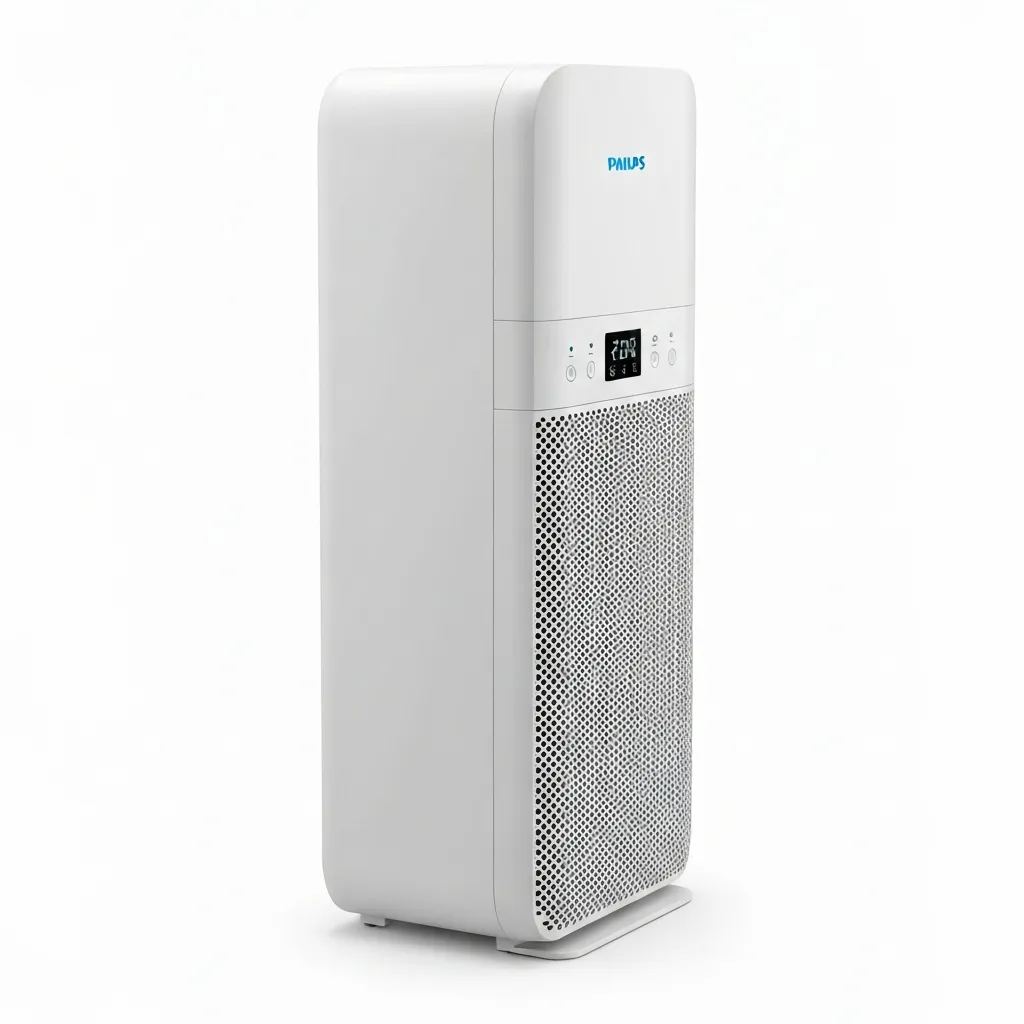
Philips Series 2000i AC2939/10
What We Like
- NanoProtect HEPA filter captures 99.97% of allergens down to 0.003 microns
- Covers up to 98 square metres, ideal for open plan living areas
- Real-time numerical PM2.5 display with colour coded air quality ring
- Allergy UK approved and recommended by the British Lung Foundation
Watch Out For
- Filter replacement costs £50 to £70 per year depending on usage
- Unit is taller than most at 61 cm and heavier at 7.7 kg
- Auto mode sometimes ramps up at night when it detects cooking from another room
The Philips AC2939 is our top pick for allergy sufferers. The Allergy UK seal of approval is backed by NanoProtect filtration that captures particles 100 times smaller than standard HEPA. The large coverage area makes it ideal for UK family homes.
Best Value for Mould: Levoit Core 400S
The Levoit Core 400S offers nearly as much coverage (83 m²) at a significantly lower price point. Its three-stage filter with H13 HEPA is equally effective at capturing mould spores, the physics of HEPA filtration means any genuine H13 filter will catch particles of this size with 99.97%+ efficiency.
Where the Levoit excels for mould-affected homes is its smart connectivity. The VeSync app shows real-time air quality readings, and you can set schedules to run the purifier on higher settings during peak moisture periods, such as after evening showers or overnight when condensation forms. The auto mode sensor ramps up when it detects a spike in particles, which happens naturally when mould colonies release a burst of spores.
At £189, the Levoit Core 400S is accessible enough that you could realistically place one in the bedroom and another in the living area for comprehensive coverage. Given that mould spores travel throughout the home, this two-purifier approach is often more effective than a single expensive unit.
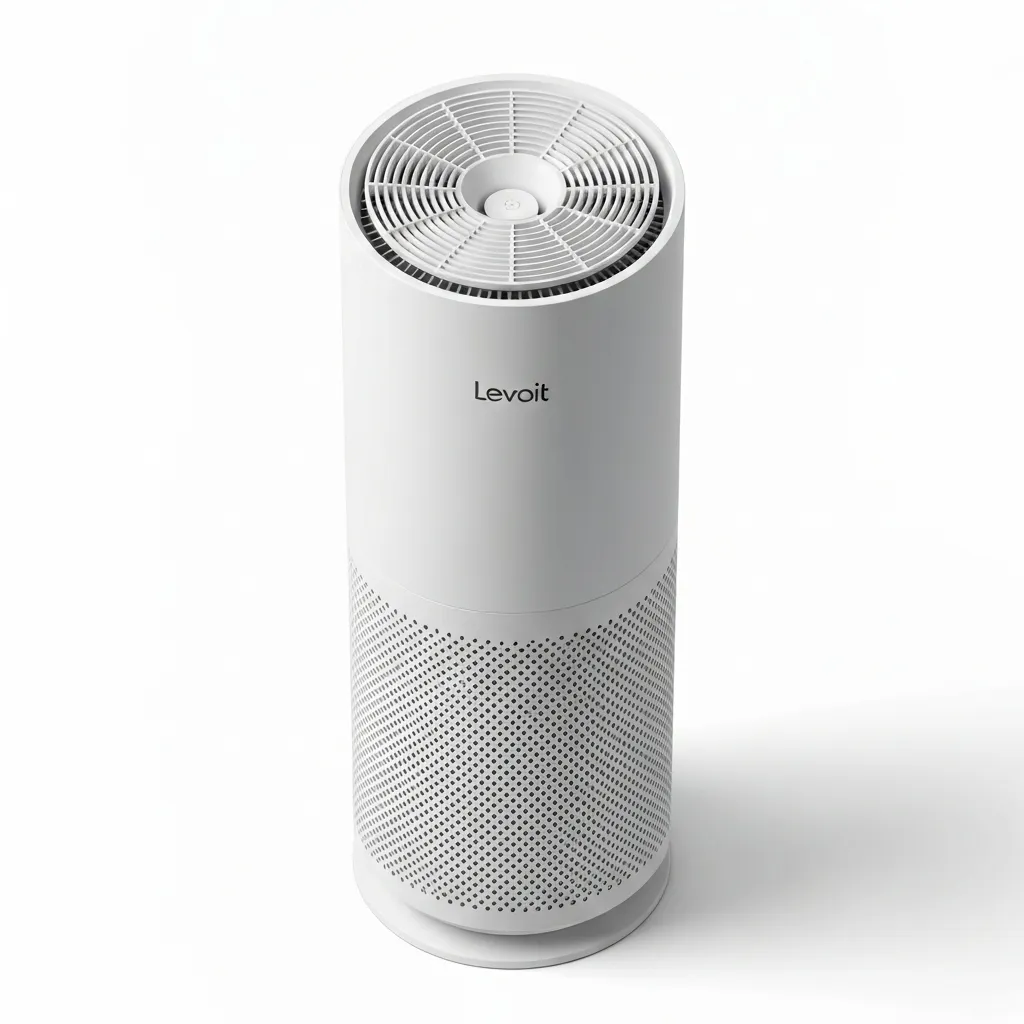
Levoit Core 400S
What We Like
- True H13 HEPA filter captures 99.97% of particles at 0.3 microns
- Covers up to 83 square metres, one of the largest coverages under £200
- Night mode runs at just 24 dB, quieter than a whisper
- VeSync app integration with Alexa and Google Home support
Watch Out For
- No air quality display on the unit itself, must use the app
- Cylindrical design takes more floor space than flat panel purifiers
- Auto mode sensor can be oversensitive to cooking steam
The Levoit Core 400S offers the best performance per pound in the UK market. It matches or beats purifiers twice its price on particle removal, covers a huge area, and runs nearly silent at night. The lack of an onboard display is the only real downside.
Air Purifier vs Dehumidifier for Mould
This is the question we hear most often from UK homeowners dealing with mould, and the honest answer is that you probably need both. Here is why.
A dehumidifier addresses the root cause of mould: excess moisture. Mould cannot grow when relative humidity is below 50%, and it thrives above 60%. A dehumidifier pulls moisture from the air, dropping the relative humidity to levels where mould growth slows dramatically and eventually stops. It does not remove existing mould, but it creates conditions where new mould cannot establish itself.
An air purifier addresses the health consequence of mould: airborne spores. It captures spores floating in the air before you breathe them in and before they settle on new surfaces. It also reduces the musty MVOC smell. But it does nothing about humidity levels, meaning the conditions for mould growth remain unchanged.
If you are forced to choose one, the dehumidifier is usually more impactful for the mould itself. But if your concern is primarily respiratory symptoms — sneezing, coughing, worsened asthma, the air purifier provides more immediate relief by removing the spores you are reacting to.
The ideal approach for a mouldy UK home is a three-step strategy: first, clean existing mould with a fungicidal wash; second, run a dehumidifier to keep humidity below 55%; and third, run an air purifier to capture any spores that are released. This combination tackles the problem from every angle.
For a detailed comparison of features, running costs and which scenarios favour each appliance, read our full air purifier vs dehumidifier guide.
Where Mould Hides in UK Homes
Understanding where mould grows helps you position your air purifier effectively and target the problem at its source. These are the most common locations in UK homes.
Bathroom Ceilings and Walls
The bathroom is the most obvious culprit. Steam from showers and baths saturates the air with moisture. Without an effective extractor fan, or if residents do not use it. This moisture condenses on the coolest surface, which is usually the ceiling. Black mould spots on bathroom ceilings are so common in UK rentals that many tenants assume it is normal. It is not. An extractor fan rated at 15 litres per second minimum should run during and for 20 minutes after every shower.
Bedroom Corners and Behind Furniture
We produce around 200 ml of moisture per person per night through breathing and perspiration. In a closed bedroom with poor ventilation, this moisture condenses on the coldest wall, usually an external wall. Wardrobes and beds pushed against external walls are particularly problematic because they block airflow and create cold, stagnant pockets where condensation forms. Pull furniture at least 10 cm away from external walls to allow air circulation.
Kitchen Walls and Ceilings
Cooking, boiling kettles and running dishwashers all produce significant moisture. A single saucepan of boiling water releases approximately 1.5 litres of steam. Without a cooker hood venting to the outside, this moisture spreads throughout the house. Mould behind kitchen units and above wall cupboards is extremely common in UK homes.
Window Reveals and Sills
Single-glazed windows and older double glazing with failed seals create cold surfaces where condensation forms overnight. The water pools on the sill and soaks into the plaster of the reveal, the sides of the window recess. This is one of the most visible forms of mould in UK homes and often the first sign that a property has a condensation problem.
Under-Floor and Crawl Spaces
Ground-floor flats and older houses with suspended timber floors can develop mould in the subfloor space. This is less visible but releases spores that rise through gaps in floorboards. If you notice a persistent musty smell at ground level, the subfloor may be the source.
Choosing the Right Purifier for Mould
When selecting an air purifier specifically for mould spore control, these are the features that matter most.
True HEPA H13 Is Non-Negotiable
Any genuine HEPA H13 filter will capture mould spores with near-perfect efficiency. The key word is genuine. Avoid purifiers marketed as "HEPA-like" or "HEPA-style", these use lower-grade filter media that may allow a significant percentage of smaller spores through. All the models in our best HEPA air purifier guide meet the true H13 standard.
Coverage Area Matters More Than You Think
Mould spores are released continuously from active colonies. A purifier needs to cycle the room air multiple times per hour to keep spore concentrations low. If your purifier is undersized for the room, it cannot keep up with the rate of spore release. Choose a model rated for at least 1.5 times your room's floor area.
Activated Carbon for the Musty Smell
The distinctive damp, musty smell of a mouldy home comes from microbial volatile organic compounds. HEPA filters do not capture these gases. Activated carbon does. Both our recommended models include carbon filtration, which noticeably reduces mould-related odours within the first day of continuous operation.
Continuous Operation
Unlike dust, which settles when you stop disturbing it, mould spores are released 24 hours a day from active growth. Your purifier should run continuously, not just when you are in the room. Auto mode is ideal: it maintains a low, quiet baseline and ramps up when spore counts spike.
Consider a Compact Unit for the Bedroom
Bedrooms are high-risk areas for mould exposure because you spend 7 to 9 hours there with the door closed. A compact bedroom purifier like the Blueair Blue 3210 running on sleep mode (18 dB, quieter than a whisper) ensures clean air throughout the night. Pair it with a larger unit in the living area for whole-home coverage.
A Complete Mould Prevention Strategy
An air purifier is one piece of the puzzle. For lasting mould control in a UK home, you need a comprehensive approach that addresses moisture at every stage.
Ventilate daily. Open windows for at least 15 minutes each morning, even in winter. Cross-ventilation (opening windows on opposite sides of the house) is most effective. If your home has trickle vents on the windows, keep them open year-round.
Use extractor fans properly. Run bathroom extractors during and for 20 minutes after showering. Run kitchen extractors while cooking and for 10 minutes afterwards. If your extractors are noisy or ineffective, replacing them is one of the best investments you can make against mould.
Dry clothes outdoors or in a vented dryer. Drying a load of washing indoors releases 2 to 5 litres of water into the air. If you must dry indoors, use a room with an open window or a dehumidifier running alongside.
Heat your home consistently. Mould thrives in cold conditions because cold air holds less moisture and reaches its dew point faster. Maintaining a consistent temperature of at least 16°C throughout the home, including rarely used rooms — reduces condensation on cold surfaces. Short bursts of high heat followed by long cold periods are less effective than constant gentle warmth.
Keep furniture away from external walls. A 10 cm gap allows air to circulate and prevents cold spots where condensation forms. This is particularly important for wardrobes and bookcases against north-facing walls.
Monitor humidity. A cheap digital hygrometer (£10 to £15) tells you exactly what your indoor relative humidity is. Aim for 40% to 55%. If it consistently reads above 60%, you have a moisture problem that needs addressing — either through better ventilation, a dehumidifier, or both.
Clean existing mould properly. Use a dedicated mould removal spray or a solution of one part bleach to four parts water. Spray onto the mould, leave for 15 minutes, and wipe clean. For porous surfaces like plaster or grout, you may need to repeat the treatment several times. Badly affected plaster or sealant should be removed and replaced.
Frequently Asked Questions
Can an air purifier get rid of mould in my home?
Do I need an air purifier or a dehumidifier for mould?
What size air purifier do I need for mould spores?
Are mould spores dangerous to health?

Still deciding? The Philips Series 2000i AC2939/10 is our top recommendation for most UK homes.
Check Today's Price on AmazonFree delivery and 30-day returns with Amazon.