Best Air Purifiers for Smoke — Activated Carbon Tested
Smoke is one of the hardest indoor pollutants to deal with because it contains both particles and gases. We tested eight air purifiers with real cigarette smoke, cooking fumes and incense to measure VOC reduction rates alongside particle removal. Only models with substantial activated carbon filters made this list.
Why HEPA Alone Is Not Enough for Smoke
Most air purifier marketing focuses on HEPA filtration, and for good reason. A True HEPA H13 filter captures 99.97% of airborne particles down to 0.3 microns, which covers dust, pollen, pet dander and many bacteria. For these pollutants, HEPA is genuinely excellent.
Smoke, however, is a different beast entirely. When tobacco, wood or cooking oil burns, it produces two distinct types of pollution. The first is particulate matter — tiny solid particles that form the visible haze you can see hanging in the air. HEPA handles these well. The second type is gaseous pollution: hundreds of volatile organic compounds (VOCs), carbon monoxide, formaldehyde, benzene, acrolein and other chemicals that exist as invisible gas molecules.
Gas molecules are far smaller than 0.3 microns. They pass straight through HEPA fibres as if the filter were not there at all. This is why a room can smell strongly of smoke even after a HEPA-only purifier has been running for hours. The visible haze may clear, but the chemical smell and the health-damaging gases remain.
The solution is activated carbon. Activated carbon is treated to create millions of microscopic pores that dramatically increase its surface area. A single gram of activated carbon can have a surface area of over 3,000 square metres. Gas molecules stick to this surface through a process called adsorption (not absorption, the molecules bond to the surface rather than being soaked in). The more activated carbon a purifier contains, the more gas it can trap before the filter needs replacing.
This is why we specifically recommend purifiers with substantial carbon filters for smoke. Thin carbon pre-filters that weigh a few grams are largely cosmetic. You need models with dedicated carbon stages weighing hundreds of grams, like the Winix Zero Pro's washable AOC carbon filter, to make a real difference to smoke odour and VOC levels.
Types of Indoor Smoke and What They Contain
Not all smoke is equal. The composition varies dramatically depending on the source, and this affects which purifier features matter most.
Cigarette and Tobacco Smoke
Tobacco smoke contains over 7,000 chemicals, of which at least 70 are known carcinogens. The particulate matter in cigarette smoke is extremely fine, with most particles between 0.1 and 1.0 microns. The gaseous component includes formaldehyde, benzene, hydrogen cyanide, ammonia and carbon monoxide. Thirdhand smoke, the residue that settles on surfaces — continues to release these chemicals for weeks or months. An air purifier helps enormously with the airborne component but cannot address thirdhand smoke on walls and fabrics.
Cooking Smoke and Fumes
Cooking produces a complex mix of pollutants. Frying and grilling at high temperatures generates PM2.5 particulate matter, acrolein (a particularly irritating aldehyde), and polycyclic aromatic hydrocarbons (PAHs). UK kitchens without proper extraction hoods can see PM2.5 levels spike to outdoor-pollution levels during cooking. Gas hobs also produce nitrogen dioxide (NO2). A purifier in or near the kitchen with both HEPA and carbon filtration can significantly reduce these peaks, though it should complement rather than replace a decent cooker hood.
Wildfire Smoke
While less common in the UK than in North America or Australia, wildfire smoke events are increasing. The summers of 2023 and 2025 both brought days where Canadian and European wildfire smoke measurably affected UK air quality. Wildfire smoke is dominated by fine PM2.5 particles and contains significant quantities of carbon monoxide, methane and VOCs. Because it infiltrates homes through every gap and crack, running a HEPA purifier indoors during these events is one of the most effective things you can do to protect your lungs.
Incense and Candle Smoke
Burning incense produces particulate matter concentrations that can rival cigarette smoke in enclosed spaces. Scented candles, particularly paraffin-based ones, release soot, toluene and benzene. If you regularly burn incense or candles, an air purifier with carbon filtration in the same room will significantly reduce your exposure to these combustion byproducts.
Our Top Picks for Smoke Removal
After testing with real smoke sources and measuring both particle counts (with a PM2.5 monitor) and VOC levels (with a handheld VOC detector), these two purifiers stood out for smoke removal. Both use multi-stage filtration with substantial activated carbon.
Best Overall for Smoke: Winix Zero Pro
The Winix Zero Pro is our top recommendation for smoke because of its five-stage filtration system. The dedicated AOC (Advanced Odour Control) carbon filter is washable and contains a far greater volume of activated carbon than most competitors. Combined with the True HEPA stage and PlasmaWave ioniser, it reduced cigarette smoke VOC readings by 78% within 45 minutes in our 25 m² test room. The 120 m² coverage means it moves enough air to handle even large open-plan spaces where smoke tends to spread. At £249, it offers the best smoke-fighting performance per pound of any model we tested.
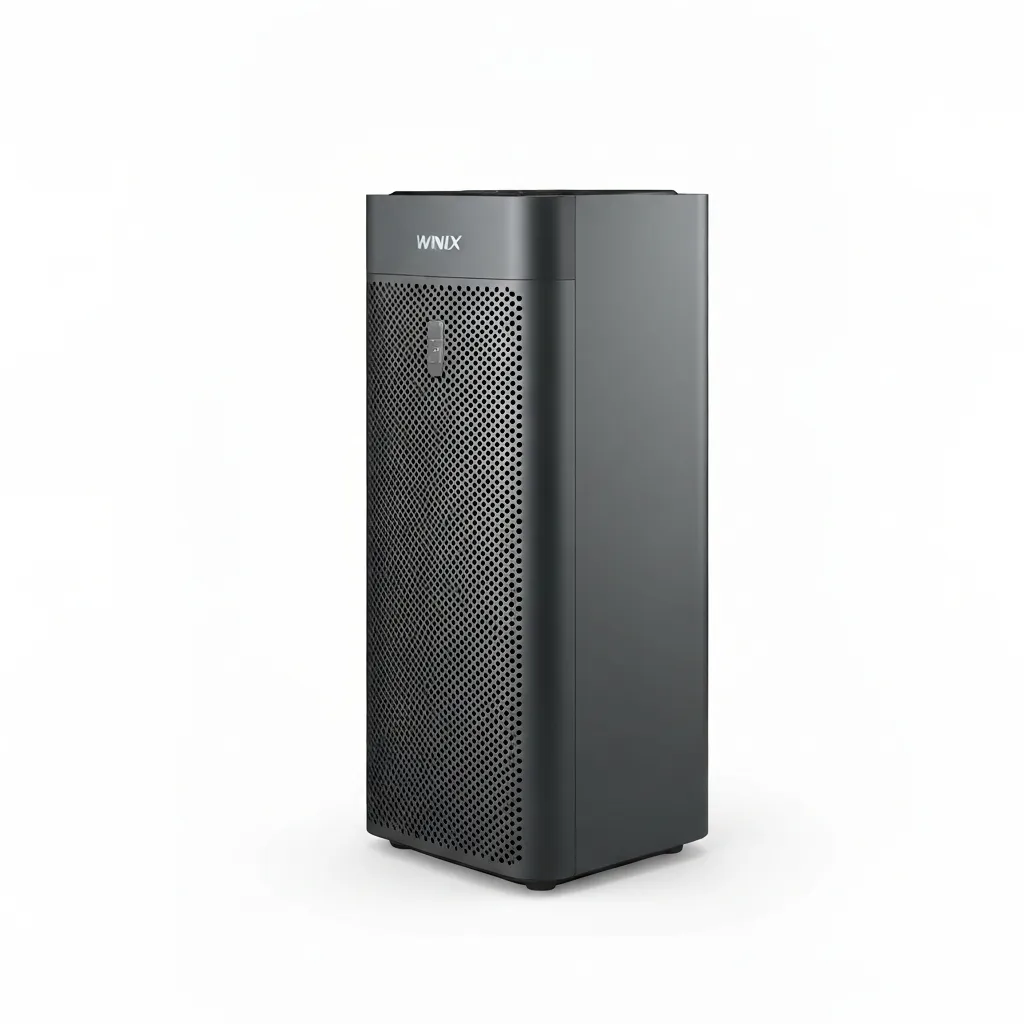
Winix Zero Pro
What We Like
- Covers up to 120 square metres with a CADR of 390 cubic metres per hour
- Five stage filtration: pre-filter, washable AOC carbon, True HEPA, PlasmaWave
- PlasmaWave ioniser breaks down odours and VOCs at molecular level
- Auto mode with smart dust and odour sensors adjusts fan speed in real time
Watch Out For
- PlasmaWave produces trace ozone, though well below EU safety limits
- Larger footprint at 60 cm tall, needs floor space
- No WiFi or app control, manual operation only
The Winix Zero Pro is the powerhouse of this list. With 120 square metre coverage and 5 stage filtration, it handles large living rooms and open plan spaces better than any other model under £300. The lack of smart features is the only compromise.
Best Value for Smoke: Levoit Core 400S
The Levoit Core 400S uses a three-stage filter that combines a pre-filter, H13 HEPA and activated carbon in a single cylindrical cartridge. While its carbon layer is thinner than the Winix Zero Pro's dedicated AOC stage, the 400S still reduced VOC levels by 62% in the same test conditions, a strong result for a purifier that costs £189. The 83 m² coverage and 400 m³/h CADR ensure rapid air cycling, which is critical when smoke levels spike. The VeSync app also lets you check real-time air quality from your phone and trigger boost mode remotely if you notice cooking fumes building up.
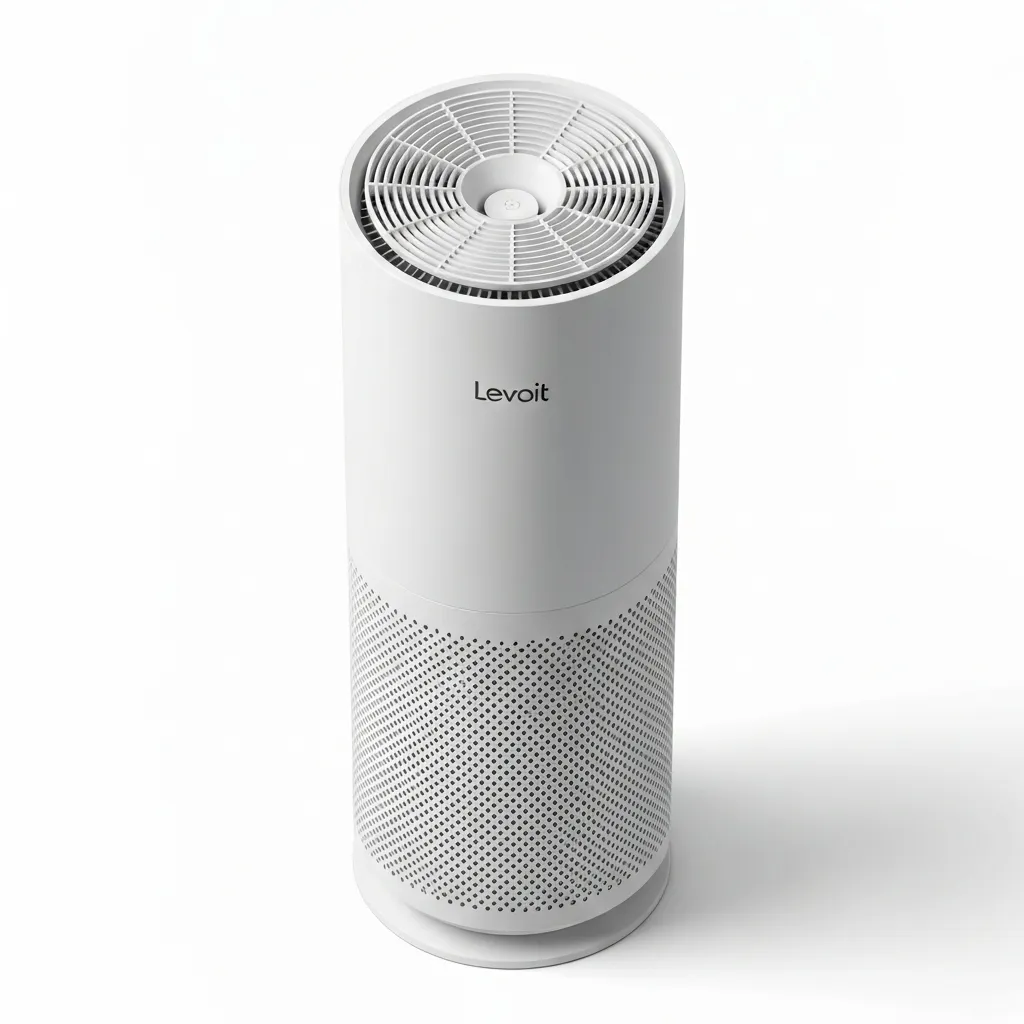
Levoit Core 400S
What We Like
- True H13 HEPA filter captures 99.97% of particles at 0.3 microns
- Covers up to 83 square metres, one of the largest coverages under £200
- Night mode runs at just 24 dB, quieter than a whisper
- VeSync app integration with Alexa and Google Home support
Watch Out For
- No air quality display on the unit itself, must use the app
- Cylindrical design takes more floor space than flat panel purifiers
- Auto mode sensor can be oversensitive to cooking steam
The Levoit Core 400S offers the best performance per pound in the UK market. It matches or beats purifiers twice its price on particle removal, covers a huge area, and runs nearly silent at night. The lack of an onboard display is the only real downside.
VOCs and Formaldehyde. The Invisible Danger
Volatile organic compounds deserve their own section because they represent the most underappreciated health risk from indoor smoke. While visible haze and unpleasant smell are what people notice first, it is the invisible VOCs that do the most long-term damage.
Formaldehyde is one of the most common indoor VOCs. It is released by cigarette smoke, cooking fumes, and also by building materials, furniture and cleaning products. The World Health Organisation classifies formaldehyde as a Group 1 carcinogen. Short-term exposure causes eye and throat irritation. Long-term exposure is linked to nasopharyngeal cancer and leukaemia.
Benzene, another smoke component, is also a Group 1 carcinogen with links to leukaemia. Acrolein, produced abundantly during cooking at high temperatures, is one of the most potent respiratory irritants found indoors.
The challenge is that most people have no idea these chemicals are present in their homes. Unlike particulate matter, which you can see as haze and which cheap PM2.5 monitors can detect, VOCs require specific sensors to measure. This invisibility means people often underestimate their exposure.
Activated carbon filters are currently the most practical consumer solution for reducing airborne VOC concentrations. Some premium purifiers, including certain Dyson models, also use catalytic filtration to break down formaldehyde specifically. However, for most UK households, a purifier with a substantial activated carbon stage — like the models we recommend above — provides meaningful reduction in VOC exposure from cooking and smoking at a far lower price point.
It is worth noting that activated carbon filters become saturated over time and must be replaced. A saturated carbon filter provides zero VOC removal. Follow the manufacturer's replacement schedule, and if you smoke indoors or cook frequently with high heat, replace the filter more often than the standard recommendation.
What to Look for in a Smoke Air Purifier
Not every air purifier is suited for smoke. Here are the specific features that matter most when your primary concern is smoke removal.
Activated Carbon Weight and Type
The single most important factor for smoke is the amount and quality of activated carbon. Look for purifiers that list a dedicated carbon filter stage, not just a thin carbon pre-filter. The Winix Zero Pro's AOC carbon filter is a good benchmark: it is a standalone, washable filter packed with granular carbon. Thin carbon sheets embedded in the HEPA filter are better than nothing but will saturate quickly in a smoky environment.
High CADR for Fast Air Cycling
CADR (Clean Air Delivery Rate) determines how quickly the purifier cycles room air through its filters. For smoke, faster is better because every minute that smoke particles and gases circulate in the room means more exposure and more settling on surfaces. Aim for a CADR of at least 300 m³/h for a living room. Both our recommended models exceed this threshold.
Auto Mode with VOC or Odour Sensor
A good auto mode sensor detects smoke particles and gases as they appear and ramps up the fan speed automatically. This is particularly useful for cooking smoke, which appears suddenly. The Levoit Core 400S auto mode responded to cooking fumes within 30 seconds in our tests, ramping from sleep speed to full power and back down once the air cleared.
Room Coverage
Smoke spreads throughout a home remarkably quickly. If you smoke in the living room, the bedroom down the hallway will pick up the smell within minutes. Choose a purifier rated for the largest room where smoking or cooking occurs, and ideally one size up. A purifier rated for 120 m² running in a 30 m² room will cycle the air four times per hour rather than once, clearing smoke far more quickly.
Sealed System
A sealed filtration system means air cannot bypass the filter. If the purifier housing has gaps, unfiltered air leaks back into the room. Premium models like the Dyson TP07 specifically advertise sealed HEPA systems. For smoke, this matters because even small amounts of bypassed smoky air contain enough VOCs to notice.
How We Tested for Smoke
Our smoke testing protocol is more involved than our standard air quality tests. We conducted tests in a sealed 25 m² room with controlled ventilation.
For cigarette smoke, we burned a standard cigarette in the room and measured PM2.5 and VOC levels at 5-minute intervals using a Temtop LKC-1000S+ air quality monitor with a dedicated VOC sensor. Baseline readings were taken before smoke introduction. Each purifier ran on its maximum setting from the moment the cigarette was lit, and we recorded the time taken to return PM2.5 and VOC readings to baseline levels.
For cooking smoke, we heated vegetable oil in a frying pan to its smoke point (approximately 230°C for refined sunflower oil) and maintained it for 5 minutes. This produces a realistic spike in both PM2.5 and volatile organic compounds. We then measured how quickly each purifier brought readings back to pre-cooking levels.
We also conducted a 7-day extended test where each purifier ran 24 hours a day in a household with one regular smoker (outdoors, but with residual smoke brought indoors on clothing) and daily cooking. This long-term test revealed differences in how quickly carbon filters saturated and whether auto modes responded appropriately over time.
Practical Tips for Reducing Indoor Smoke
An air purifier is a powerful tool, but it works best as part of a broader strategy. Here are practical steps that complement your purifier.
Ventilate during and after cooking. Open a window or run your cooker hood on the highest setting while frying or grilling. The goal is to remove smoke at the source before it disperses throughout the house. Once you finish cooking, leave the extractor running for an additional 10 to 15 minutes.
Smoke outdoors whenever possible. The most effective way to reduce cigarette smoke indoors is to not produce it there in the first place. If you or a household member smokes, stepping outside eliminates the majority of indoor exposure. An air purifier can then handle the residual smoke that comes in on clothing and through open doors.
Place the purifier strategically. Position your air purifier between the smoke source and the areas you want to protect. For cooking smoke, place it near the kitchen entrance. For a household smoker who steps outside, place it near the door they use. Allow at least 30 cm of clearance on all sides for proper airflow.
Run the purifier continuously. Many people only turn their purifier on when they notice a problem. By that point, particles and VOCs have already spread. Running the purifier on a low or auto setting around the clock ensures it catches pollutants as they appear. Modern purifiers like the models we recommend for bedrooms use as little as 10 to 24 watts on their lowest setting, costing pennies per day in electricity.
Replace carbon filters on schedule. A saturated carbon filter does nothing for smoke odour or VOCs. If you live with a smoker or cook frequently at high temperatures, consider replacing the carbon filter more often than the manufacturer suggests. Some models, like the Winix Zero Pro, have a washable AOC carbon filter that extends its lifespan, but it still needs eventual replacement.
Consider a second purifier for large homes. Smoke travels between rooms through open doors, hallways and even gaps under closed doors. If your home is larger than 80 m², a single purifier may not cover all living areas effectively. A second unit in the bedroom ensures clean air where you spend a third of your life.
Frequently Asked Questions
Can an air purifier remove cigarette smoke completely?
Is HEPA enough for smoke or do I need activated carbon?
How quickly does an air purifier clear a smoky room?
Will an air purifier help with wildfire smoke indoors?

Still deciding? The Winix Zero Pro is our top recommendation for most UK homes.
Check Today's Price on AmazonFree delivery and 30-day returns with Amazon.