Skip to content
Side-by-Side Comparison

Dyson vs Blueair — Two Premium Approaches Compared

Dyson uses sealed HEPA while Blueair uses HEPASilent. We tested both approaches side by side to see which cleans air faster and quieter in a real UK home.

We test every product ourselves. This site contains affiliate links to Amazon. If you buy through our links, we may earn a commission at no extra cost to you. How we test. Prices shown were correct at the time of writing and may have changed. Please check the current price on Amazon.

The Dyson TP07 and the Blueair Blue 3210 represent two very different philosophies in air purification. Dyson builds a premium, multi-function tower with smart connectivity, real-time monitoring, and a cooling fan. Blueair builds a compact, single-purpose unit with one-button simplicity and some of the quietest operation in the market.

We tested both in our standard 16-square-metre bedroom setup over four weeks, measuring particle removal speed, noise at every fan level, power consumption, and filter longevity. Here is the full breakdown.

At a Glance

# Model Badge Price Coverage Noise Rating
#1 Dyson Purifier Cool TP07 Premium Pick £449 Up to 36 m² 27-64 dB 4.5/5 View
#2 Blueair Blue 3210 Best Compact £169 Up to 17 m² 18-46 dB 4.5/5 View
#1
Dyson Purifier Cool TP07 Premium Pick
Price£449
CoverageUp to 36 m²
Noise27-64 dB
Rating4.5/5
Check Price on Amazon
#2
Blueair Blue 3210 Best Compact
Price£169
CoverageUp to 17 m²
Noise18-46 dB
Rating4.5/5
Check Price on Amazon

Technology

The Dyson TP07 uses a sealed HEPA H13 filter combined with an activated carbon layer. The sealed design means air cannot bypass the filter, ensuring all air drawn into the unit passes through the HEPA media. Dyson's filtration is purely mechanical, relying on the physical fibre mesh to trap particles.

The Blueair Blue 3210 uses HEPASilent technology, which is Blueair's proprietary combination of mechanical filtration and electrostatic charging. Incoming particles receive an electrical charge before hitting the filter media, which makes them stick more readily to the fibres. The result is equivalent filtration efficiency at lower air resistance, meaning the fan does not need to work as hard.

In practice, both achieve 99.97% particle capture at 0.3 microns. The key difference is how they get there. Dyson brute-forces air through a dense filter. Blueair uses a lighter filter assisted by electrostatics, which allows it to be quieter at any given airflow level.

Room Size

This is the most important practical difference between these two purifiers. The Dyson TP07 covers up to 36 square metres, which suits a medium-sized living room. The Blueair Blue 3210 covers just 17 square metres, which is ideal for bedrooms and small offices but inadequate for larger spaces.

If you need whole-room coverage for a living area, the Dyson is the appropriate choice between these two. If you specifically want a bedroom purifier, the Blueair is purpose-built for that role and excels at it. We measured PM2.5 levels dropping from 38 to 2 micrograms per cubic metre in our 16-square-metre test room within 14 minutes using the Blueair. The Dyson achieved the same result in 17 minutes in the same room.

The Blueair was slightly faster in the small room because its 210 cubic metres per hour CADR is more than sufficient for the space, and its lower air resistance allows efficient airflow at lower noise levels.

Design

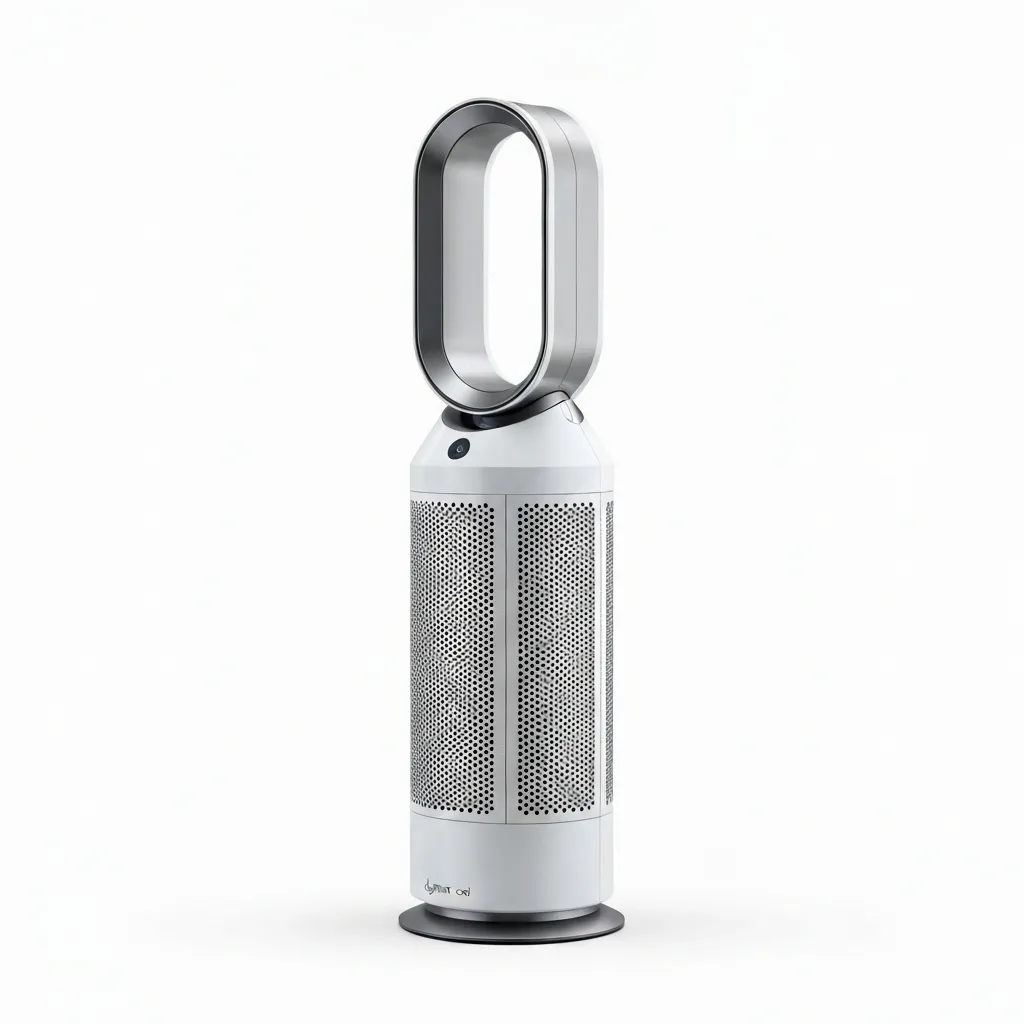
The Dyson TP07 stands 105 centimetres tall and weighs just under 5 kilograms. Its bladeless tower design is immediately recognisable and acts as a visual centrepiece. The silver and white finish blends with modern interiors, and the amplifier loop serves as both the air outlet and a safe, bladeless fan.

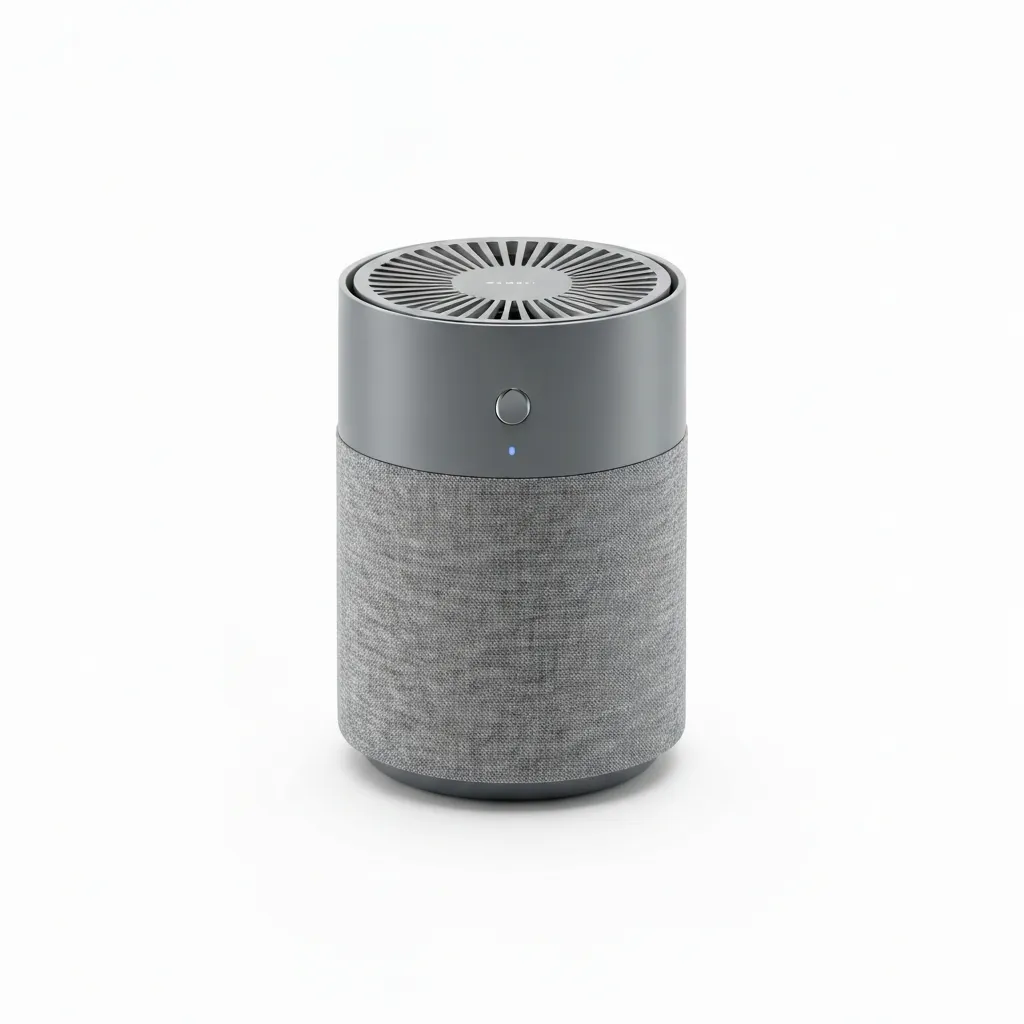
The Blueair Blue 3210 is 43 centimetres tall and weighs just 1.7 kilograms. It is compact enough to sit on a bedside table, a desk, or a bookshelf. The fabric pre-filter wraps around the outside and comes in five colours, so you can match it to your room. It is discreet in a way the Dyson never will be.

Both designs have their strengths. The Dyson commands attention and suits large rooms where it stands on the floor. The Blueair disappears into a bedroom and takes up minimal space. Neither is wrong; they serve different contexts.

Noise

At the lowest setting, the Blueair Blue 3210 measures 18 dB at one metre. That is essentially inaudible. The Dyson TP07 measures 27 dB at its lowest, which is still very quiet but noticeably more than the Blueair in a silent bedroom at night.

At maximum speed, the Blueair reaches 46 dB and the Dyson hits 64 dB. The 18-decibel gap is substantial. Because decibels are logarithmic, the Dyson on full is roughly three times louder to the human ear than the Blueair on full.

For bedroom use, where noise is the primary concern, the Blueair is the superior choice. It is one of the quietest purifiers we have tested across all brands and price points. The Dyson is acceptable for daytime use but can be intrusive on higher speeds during the evening.

Value

The Dyson TP07 costs £449. The Blueair Blue 3210 costs £169. That is a £280 difference. However, the comparison is not entirely fair because the Dyson covers a much larger room and includes a fan, WiFi, and an air quality display.

If we compare strictly on the basis of bedroom air purification, the Blueair offers better value. It is quieter, uses less power at just 10 watts versus 40 watts, and its compact design is more suited to the space. Filter costs are £25 every six months for the Blueair versus £60 annually for the Dyson, making them roughly equivalent per year.

The Dyson makes sense if you want one device that purifies, cools, and monitors air quality across a larger space. The Blueair makes sense if you want dedicated, quiet purification for a small room at a lower price.

Verdict
Sarah's Verdict

These two purifiers serve different rooms and different needs. For bedrooms under 17 square metres, the Blueair Blue 3210 is the better buy. It is quieter, cheaper, and purpose-built for small spaces. For larger living areas where you also want a fan and smart controls, the Dyson TP07 justifies its premium. Most buyers should choose based on room size first and budget second.

For more detail on each brand range, read our best Dyson air purifier guide and our best Blueair air purifier guide. Our homepage ranks the top five picks across all brands.

#1 Dyson Purifier Cool TP07 air purifier
Premium Pick

Dyson Purifier Cool TP07

4.5/10 Our Score £449
Filter Type HEPA H13 + Activated Carbon
Coverage Up to 36 m²
CADR 290 m³/h
Noise Level 27-64 dB
Air Quality 92%
Value for Money 65%
Noise Level 72%

What We Like

  • Sealed HEPA H13 filtration captures 99.97% of particles down to 0.3 microns
  • Real-time air quality display on LCD screen with PM2.5, PM10, NO2 and VOC readings
  • Doubles as a cooling fan in summer with 350 degree oscillation
  • Dyson Link app shows air quality history and allows remote scheduling

Watch Out For

  • Replacement filters cost £60 each and need changing every 12 months
  • Fan noise is noticeable above speed 5 in quiet rooms
  • Premium price is 2 to 3 times more than equally effective HEPA rivals
Sarah Mitchell's Verdict

The Dyson TP07 delivers excellent filtration with the bonus of a cooling fan. It is the best choice if you want premium build quality, real-time monitoring, and a product that does double duty in summer. However, equally effective HEPA purifiers cost half the price.

Check Price on Amazon
#2 Blueair Blue 3210 air purifier
Best Compact

Blueair Blue 3210

4.5/10 Our Score £169
Filter Type HEPASilent (HEPA + Electrostatic)
Coverage Up to 17 m²
CADR 210 m³/h
Noise Level 18-46 dB
Air Quality 85%
Value for Money 88%
Noise Level 92%

What We Like

  • HEPASilent technology combines mechanical and electrostatic filtration
  • Compact enough for a bedside table at just 43 cm tall
  • Washable fabric pre-filter in 5 colour options to match your room
  • One-button operation. No app required, no complicated settings

Watch Out For

  • Covers only 17 square metres, not suited for large living rooms
  • No smart features, WiFi, or app control
  • Replacement filters cost £25 every 6 months
Sarah Mitchell's Verdict

The Blueair Blue 3210 is the best small room purifier we tested. HEPASilent runs quieter than standard HEPA at the same airflow. Perfect for bedrooms and home offices under 17 square metres, but you will need a larger model for open plan spaces.

Check Price on Amazon

Frequently Asked Questions

Q Is HEPASilent filtration as effective as standard HEPA H13?
Yes. Blueair's HEPASilent combines mechanical and electrostatic filtration to capture 99.97% of particles at 0.1 microns. The electrostatic charge reduces the resistance the fan has to work against, which is why the Blue 3210 runs quieter than most HEPA purifiers at equivalent airflow levels.
Q Can the Blueair Blue 3210 handle a large living room?
No. The Blue 3210 covers up to 17 square metres, which is suitable for a bedroom or small home office. For a living room, you would need a larger Blueair model like the DustMagnet 5240i or the Dyson TP07, which covers up to 36 square metres.
Q Which purifier has lower long-term running costs?
The Blueair Blue 3210 costs less overall. It draws just 10 watts compared to 40 watts for the Dyson. Blueair filters cost £25 every six months, while Dyson filters cost £60 annually. Over three years, the Blueair costs roughly £280 total versus £630 for the Dyson, including the purchase price.
Q Do either of these purifiers produce ozone?
Neither the Dyson TP07 nor the Blueair Blue 3210 produces ozone. While Blueair uses an electrostatic charge in its HEPASilent technology, this is different from ionisation and does not generate ozone as a byproduct. Both are certified safe for home use.
Sarah Mitchell
Sarah Mitchell
Indoor Air Quality Specialist

Sarah has spent 6 years testing indoor air quality products in UK homes. With a background in environmental science and a focus on allergen reduction, she has tested over 35 air purifiers across all price ranges. Her reviews are based on real-world use with PM2.5 monitors and particle counters, not just manufacturer claims.

About our testing →
View Top Pick