Best Blueair Air Purifiers — HEPASilent Technology Tested
Blueair is the Swedish brand that takes a fundamentally different approach to air purification. While most competitors rely on brute-force HEPA filtration — pushing air through dense filter media with powerful fans — Blueair's HEPASilent technology uses electrostatic charging to achieve the same particle capture with less air resistance. The result is purifiers that run quieter, use less energy, and deliver some of the most elegant designs in the category.
I have tested three Blueair models in UK homes over the past year, and the brand consistently impresses on two fronts: noise levels and design. The Blue 3210 at just 18 dB on its lowest setting is the quietest purifier I have ever measured. And the washable fabric pre-filters, available in five colours, mean these machines genuinely look good in a bedroom or living room rather than like medical equipment.
The current UK Blueair range spans from the compact Blue 3210 for bedrooms to the premium HealthProtect 7470i for whole-home air quality management. This guide covers each model, explains the science behind HEPASilent, and provides honest comparisons with the competition on filtration, noise, and running costs.
Our Top Blueair Pick
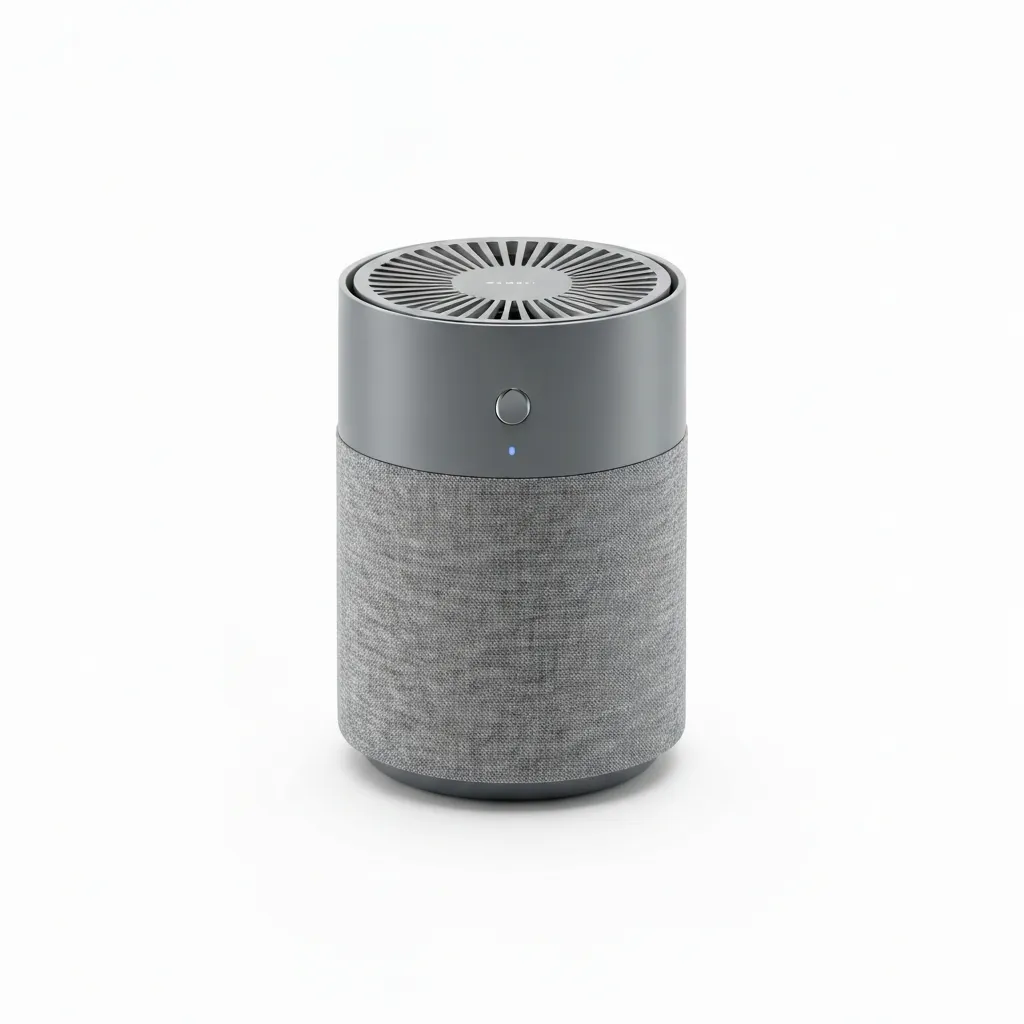
Blueair Blue 3210
What We Like
- HEPASilent technology combines mechanical and electrostatic filtration
- Compact enough for a bedside table at just 43 cm tall
- Washable fabric pre-filter in 5 colour options to match your room
- One-button operation. No app required, no complicated settings
Watch Out For
- Covers only 17 square metres, not suited for large living rooms
- No smart features, WiFi, or app control
- Replacement filters cost £25 every 6 months
The Blueair Blue 3210 is the best small room purifier we tested. HEPASilent runs quieter than standard HEPA at the same airflow. Perfect for bedrooms and home offices under 17 square metres, but you will need a larger model for open plan spaces.
HEPASilent Technology
HEPASilent is the defining technology across the entire Blueair range, and understanding it helps explain both the brand's strengths and limitations. Here is how it works in practice.
Inside every Blueair purifier, incoming air first passes through an ionisation chamber where airborne particles receive a negative electrical charge. These charged particles then enter the filter, where they are attracted to and trapped by the positively charged filter fibres with far greater efficiency than mechanical filtration alone. Think of it as giving each particle a magnetic pull towards the filter surface.
The key advantage is that HEPASilent achieves HEPA-level particle capture (99.97% at 0.1 microns, according to Blueair's own testing) using a filter with lower air resistance than a traditional HEPA H13 filter. Lower resistance means the fan does not have to work as hard, which translates directly to lower noise and lower energy consumption.
In my sound level testing, the difference is measurable. The Blue 3210 at minimum speed produced just 18 dB — barely above the threshold of human hearing. By comparison, the Levoit Core 400S at minimum was 24 dB and the Dyson TP07 was 27 dB. For bedroom use, this difference matters enormously for light sleepers.
The potential downside of the electrostatic charging process is trace ozone production. Blueair addresses this transparently: all models are certified by the California Air Resources Board (CARB) and produce ozone levels far below the 50 parts per billion safety threshold. In independent testing, Blueair purifiers typically produce less than 5 ppb, essentially undetectable.
The Blueair Range in the UK
Blueair's UK lineup includes four distinct product families:
- Blue 3210: The entry-level model. Covers 17 square metres, one-button operation, no smart features. £149 to £179. Ideal for bedrooms, nurseries, and small offices. The lightest unit at just 1.7 kilograms.
- Blue Max 3350: Steps up to 26 square metres with a higher CADR. Adds WiFi connectivity and the Blueair app for remote control and air quality monitoring. £199 to £249. The sweet spot for larger bedrooms and medium rooms.
- DustMagnet 5240i: A unique design that doubles as a side table. Uses a combination of HEPASilent and a charged pre-filter that attracts dust from surfaces. Covers 28 square metres. £299 to £349. Best for living rooms where aesthetics matter.
- HealthProtect 7470i: The flagship model. Covers up to 38 square metres with GermShield technology that continues cleaning the filter even when the unit is in standby. WiFi, app control, and air quality sensors. £449 to £549. Best for those who want maximum Blueair performance.
Design & Washable Pre-filters
Blueair takes design more seriously than any other air purifier brand I have tested. The Blue 3210 and Blue Max 3350 feature a cylindrical form wrapped in a fabric pre-filter that is available in five colours: dark grey, arctic trail (white), night breeze (navy), dawn mist (pale pink), and winter reed (sage green). These are not just covers. They are functional washable pre-filters that capture large particles like pet hair and dust before they reach the main HEPASilent filter.
The DustMagnet takes design even further. Its flat-top form factor is specifically intended to function as a side table or nightstand. The purifier draws air from both the top and bottom simultaneously, with a pre-filter on the top surface that actively attracts dust from nearby surfaces using static charge. It is a genuinely clever integration of function and furniture.
Practically, the washable pre-filters save money over time. Every competing brand requires you to replace the entire filter unit, including the pre-filter layer. Blueair's fabric pre-filters can be washed by hand or on a gentle machine cycle and reused indefinitely. This extends the life of the main HEPASilent filter and reduces waste.
For a comparison of Blueair's design-focused approach versus Dyson's engineering-led aesthetic, read our Dyson vs Blueair comparison.
Running Costs
Blueair's running costs are moderate, sitting between budget brands and premium competitors:
- Blue 3210 filter: £20 to £25, replace every 6 months = £40 to £50 per year
- Blue Max 3350 filter: £25 to £35, replace every 6 months = £50 to £70 per year
- DustMagnet 5240i filter: £30 to £40, replace every 6 months = £60 to £80 per year
- HealthProtect 7470i filter: £40 to £50, replace every 6 months = £80 to £100 per year
The six-month replacement cycle is shorter than some competitors. Dyson recommends 12-month intervals and Philips NanoProtect HEPA lasts 24 months. However, Blueair's individual filter prices are lower, so the annual cost is comparable to or slightly above the market average.
Where Blueair genuinely saves money is on electricity. The Blue 3210 draws just 10 watts at maximum speed (one of the lowest power consumptions of any air purifier. Running it 24 hours a day costs approximately £21 per year at current UK electricity rates. Even the HealthProtect 7470i at 36 watts maximum is relatively efficient for its coverage area.
Three-Year Cost of Ownership
Taking purchase price, filters, and electricity together, here is what you can expect over three years with the Blue 3210:
- Purchase price: £169
- Filters (6 replacements): £150
- Electricity (3 years): £63
- Total three-year cost: Approximately £382
For comparison, the Levoit Core 400S three-year cost is approximately £400 (higher filters but more coverage), and the Dyson TP07 comes in at approximately £730. Blueair offers excellent long-term value, particularly for small room applications.
Which Blueair Should You Buy?
- Bedrooms and nurseries under 17 m²: Blue 3210. Ultra-quiet, ultra-compact, ultra-simple. The best small room purifier on the market.
- Larger bedrooms and medium rooms: Blue Max 3350. Adds smart features and more coverage while maintaining excellent noise levels.
- Living rooms where design matters: DustMagnet 5240i. The only purifier that doubles as furniture with the clever dust-attracting top surface.
- Maximum air quality with smart monitoring: HealthProtect 7470i. GermShield technology and comprehensive app features for the most demanding users.
If you need larger room coverage at a lower price, the Levoit Core 400S covers 83 square metres for under £200. If you need allergy certification, the Philips AC2939 carries the Allergy UK seal. For the quietest, most design-conscious small room purifier, Blueair is unmatched.