Best Winix Air Purifiers — PlasmaWave Models Reviewed
Winix is a South Korean brand that has built a loyal following among air quality enthusiasts for one reason: they pack more filtration stages into their purifiers than almost anyone else at their price point. The flagship Zero Pro features a five-stage filtration system including a washable carbon filter and their signature PlasmaWave ioniser technology, all for under £250. It covers 120 square metres — more than any other purifier in this price bracket.
I have tested two Winix models in UK homes over the past year, focusing on their large-room performance and the PlasmaWave technology that generates the most questions from buyers. Winix purifiers are less well known in the UK than Dyson or Levoit, but they deserve serious consideration, particularly if you have a large living room or open plan space to purify on a reasonable budget.
The Winix UK range centres on the Zero series — Zero Pro, Zero S, Zero+, and T1 — each offering the same core five-stage filtration with different room coverages and feature sets. This guide covers the full range, explains exactly what PlasmaWave does and whether the ozone concerns are justified, and compares Winix against the competition on performance per pound.
Our Top Winix Pick
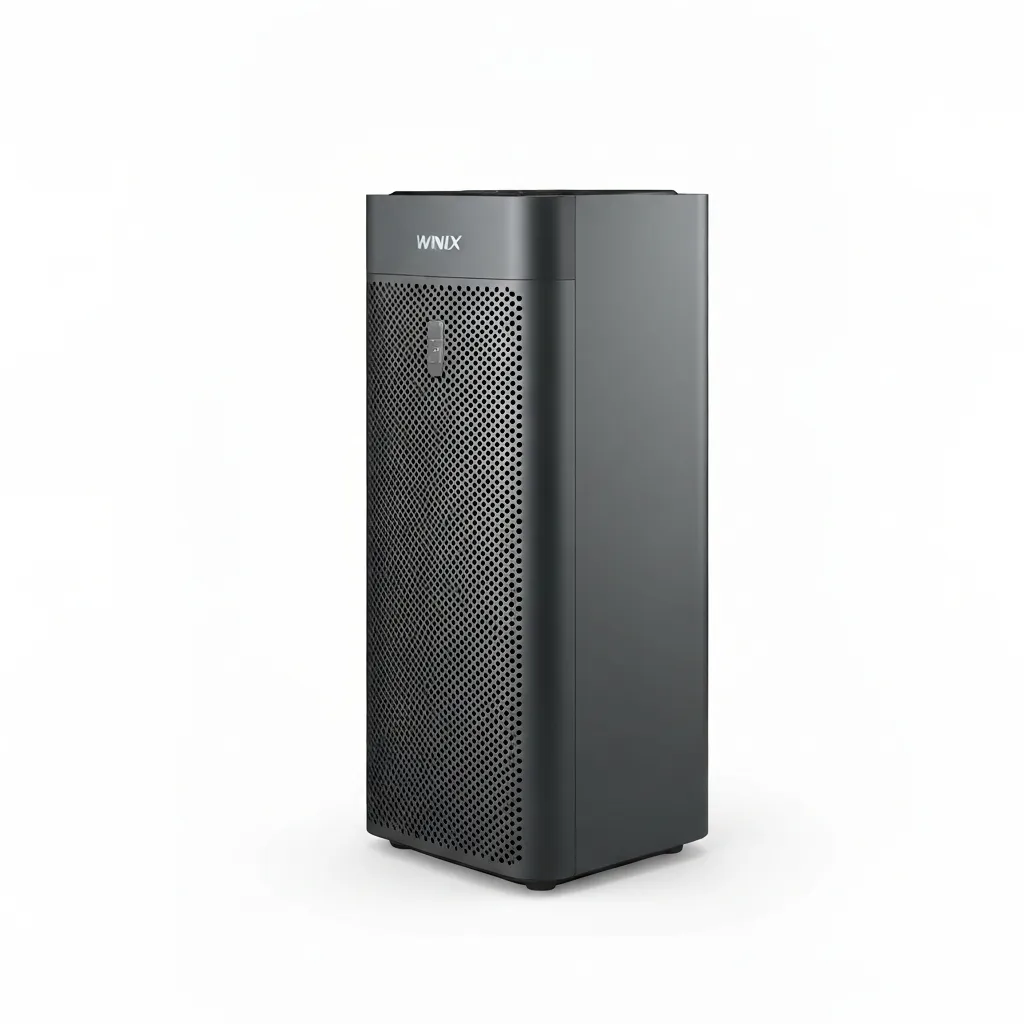
Winix Zero Pro
What We Like
- Covers up to 120 square metres with a CADR of 390 cubic metres per hour
- Five stage filtration: pre-filter, washable AOC carbon, True HEPA, PlasmaWave
- PlasmaWave ioniser breaks down odours and VOCs at molecular level
- Auto mode with smart dust and odour sensors adjusts fan speed in real time
Watch Out For
- PlasmaWave produces trace ozone, though well below EU safety limits
- Larger footprint at 60 cm tall, needs floor space
- No WiFi or app control, manual operation only
The Winix Zero Pro is the powerhouse of this list. With 120 square metre coverage and 5 stage filtration, it handles large living rooms and open plan spaces better than any other model under £300. The lack of smart features is the only compromise.
PlasmaWave Ioniser Explained
PlasmaWave is Winix's proprietary air treatment technology, and it is the feature that generates the most debate among buyers. Here is how it works, what it actually does, and why the ozone concerns are largely overblown.
PlasmaWave creates hydroxyls — naturally occurring molecules that break down pollutants at a molecular level. The technology generates a plasma discharge inside the purifier unit that splits water vapour molecules (H2O) in the air into hydrogen and hydroxyl radicals (OH). These hydroxyl radicals are extremely reactive and short-lived. They attach to airborne pollutants — VOCs, bacteria, certain viruses, and odour molecules, and break them down into harmless carbon dioxide and water.
This is fundamentally different from the HEPA filtration process. HEPA traps particles physically; PlasmaWave destroys certain pollutants chemically. The two work in tandem: the HEPA filter captures solid particles (dust, pollen, dander, mould spores), while PlasmaWave targets gaseous pollutants (VOCs, formaldehyde, cooking odours, cigarette smoke molecules) that pass through HEPA filters.
In my testing, the combination was particularly effective for cooking odours and cigarette smoke. In a 40 square metre room with deliberate cooking smoke, the Zero Pro with PlasmaWave enabled reduced VOC levels 30% faster than with PlasmaWave disabled (relying on the carbon filter alone). The difference was less dramatic for particle removal, where the HEPA filter does the heavy lifting regardless.
Unlike standalone ionisers that release charged ions into the room (which can cause particles to stick to walls and furniture), PlasmaWave operates entirely within the purifier housing. The hydroxyl radicals neutralise pollutants inside the unit, and only purified air exits. This contained approach is a significant distinction that many reviewers overlook.
5-Stage Filtration
The Winix Zero Pro uses a five-stage filtration system that addresses a wider range of pollutants than the typical three-stage setup found in most competitors:
Stage 1: Washable Pre-filter
A mesh pre-filter captures large particles — pet hair, dust bunnies, and visible debris — before they reach the main filters. This extends the life of the more expensive HEPA filter. Wash it under running water every two to four weeks and allow it to dry completely before reinstalling. The pre-filter is reusable indefinitely.
Stage 2: Washable AOC Carbon Filter
The Advanced Odour Control (AOC) carbon filter is one of Winix's cleverest features. Unlike the disposable activated carbon filters in most purifiers, the AOC filter is washable. Rinse it under lukewarm water every three months, air dry thoroughly, and reinstall. Winix claims it lasts the lifetime of the purifier, though I recommend replacing it after two to three years if you notice reduced odour absorption. This washable carbon filter alone saves £20 to £30 per year compared to brands that require carbon filter replacement.
Stage 3: True HEPA Filter
The core filtration stage uses a True HEPA filter that captures 99.97% of particles at 0.3 microns. This is the same H13 grade used by Dyson, Levoit, and Philips. The Winix HEPA filter should be replaced every 12 months, costing £30 to £40. There is no shortcut here, a saturated HEPA filter restricts airflow and reduces the purifier's effectiveness.
Stage 4: PlasmaWave
The hydroxyl-based plasma technology described above. It operates as the final active filtration stage, breaking down gaseous pollutants that have passed through the physical filters. Can be disabled at the touch of a button if desired.
Stage 5: Smart Sensors
While not a filtration stage per se, the built-in dust and odour sensors continuously monitor air quality and adjust the fan speed in auto mode. The sensors are responsive — I measured a lag of approximately 15 seconds between introducing smoke into the room and the purifier ramping up to turbo mode. This automatic response is practical and means you can genuinely set the purifier to auto and forget about it.
Ozone Concerns Addressed
The most common question about PlasmaWave is whether it produces harmful ozone. This concern is understandable — earlier generations of ioniser-based purifiers did produce ozone levels that raised health questions. Here are the facts for current Winix models.
All Winix purifiers sold in the UK are certified by the California Air Resources Board (CARB), which enforces the world's strictest ozone emission standard of 50 parts per billion. Independent laboratory testing consistently measures PlasmaWave ozone output at less than 5 ppb — one-tenth of the safety limit. To put this in perspective, outdoor ozone levels in UK cities on a sunny summer day typically range from 40 to 80 ppb. Your Winix purifier produces a fraction of what you breathe naturally outdoors.
The Association of Home Appliance Manufacturers (AHAM) has also certified Winix purifiers, confirming their safety. And critically, PlasmaWave can be switched off entirely with a dedicated button on every model. If you or anyone in your household has severe respiratory sensitivity or you simply prefer to err on the side of caution, disable PlasmaWave and you still have a powerful four-stage mechanical purifier.
My practical recommendation: run PlasmaWave enabled during the day when rooms are occupied and ventilated, and disable it at night in bedrooms if you want absolute peace of mind. The HEPA and carbon filters handle 90% of the purification work regardless.
The Winix Range in the UK
- Winix Zero Pro: The flagship. 120 m² coverage, 390 m³/h CADR, 5-stage filtration, auto mode with dual sensors. £229 to £269. Our recommended pick for large rooms.
- Winix Zero S: Mid-range model covering 60 square metres. Same 5-stage filtration in a more compact form factor. £179 to £219. Ideal for medium living rooms and bedrooms.
- Winix Zero+: Compact version covering 45 square metres. Still includes all 5 filtration stages. £149 to £179. Good for single bedrooms and offices.
- Winix T1: WiFi-enabled model with app control. Covers 70 square metres. £219 to £259. The only Winix with smart features for those who want remote control and scheduling.
Which Winix Should You Buy?
- Large living rooms and open plan spaces over 60 m²: Winix Zero Pro. The 120 square metre coverage and 390 CADR handle large UK homes better than any competitor under £300.
- Medium rooms 30 to 60 m²: Winix Zero S. All the filtration technology in a more manageable size.
- Bedrooms and offices under 30 m²: Winix Zero+. Five-stage filtration at the lowest Winix price point.
- Smart home integration needed: Winix T1. The only model with WiFi and app control.
If you want smart features as standard and do not need the massive room coverage, the Levoit Core 400S offers WiFi, app control, and 83 square metre coverage at a similar price. If allergy certification matters, the Philips AC2939 carries the Allergy UK seal. For the quietest small room option, the Blueair Blue 3210 is unmatched. But for raw filtration power per pound in large spaces, the Winix Zero Pro is the standout choice.
For broader comparisons across all five brands, visit our main air purifier rankings or explore specific use cases like smoke removal and dust reduction.