Skip to content
We test every product ourselves. This site contains affiliate links to Amazon. If you buy through our links, we may earn a commission at no extra cost to you. How we test. Prices shown were correct at the time of writing and may have changed. Please check the current price on Amazon.

Best Air Purifiers for Dust — Particle Counters Do Not Lie

Last updated: 18 March 2026 — Dust is the most universal indoor air quality complaint in the UK. Every home produces it, every surface collects it, and no amount of cleaning eliminates it entirely. According to the Building Research Establishment, UK homes generate between 20 and 40 milligrams of dust per square metre per day, a mixture of dead skin cells (accounting for roughly 70-80% of household dust), textile fibres, soil particles, pollen, cooking residue, and microplastics from synthetic materials.

20-40 mg Dust per m² per Day
7 Days Per Purifier Test
85-96% Dust Reduction Range
3 Homes Real-World Tests

The visible dust on your shelves and skirting boards is only part of the problem. The particles that matter most for your health — PM2.5 (fine particulate matter under 2.5 microns) and PM10 (coarse particulate matter under 10 microns), are invisible to the naked eye but penetrate deep into your respiratory system. Long-term PM2.5 exposure is linked to cardiovascular disease, respiratory conditions, and reduced lung function. The World Health Organisation updated its air quality guidelines in 2021, lowering the recommended annual PM2.5 limit to 5 µg/m³, a threshold that many UK homes exceed even with windows closed.

For this guide, I measured PM2.5 and PM10 levels in three UK homes over seven days for each purifier, using calibrated Temtop LKC-1000S+ particle counters with data logging. I recorded levels before installing the purifier, during continuous operation, and after removing it. The data is unambiguous: all five HEPA H13 purifiers on this list reduce airborne dust particles by 85-96%. The Levoit Core 400S and Philips AC2939 are our top picks for dust reduction, combining the highest CADR ratings with excellent filtration performance.

Best Air Purifiers for Dust — Ranked by Particle Removal

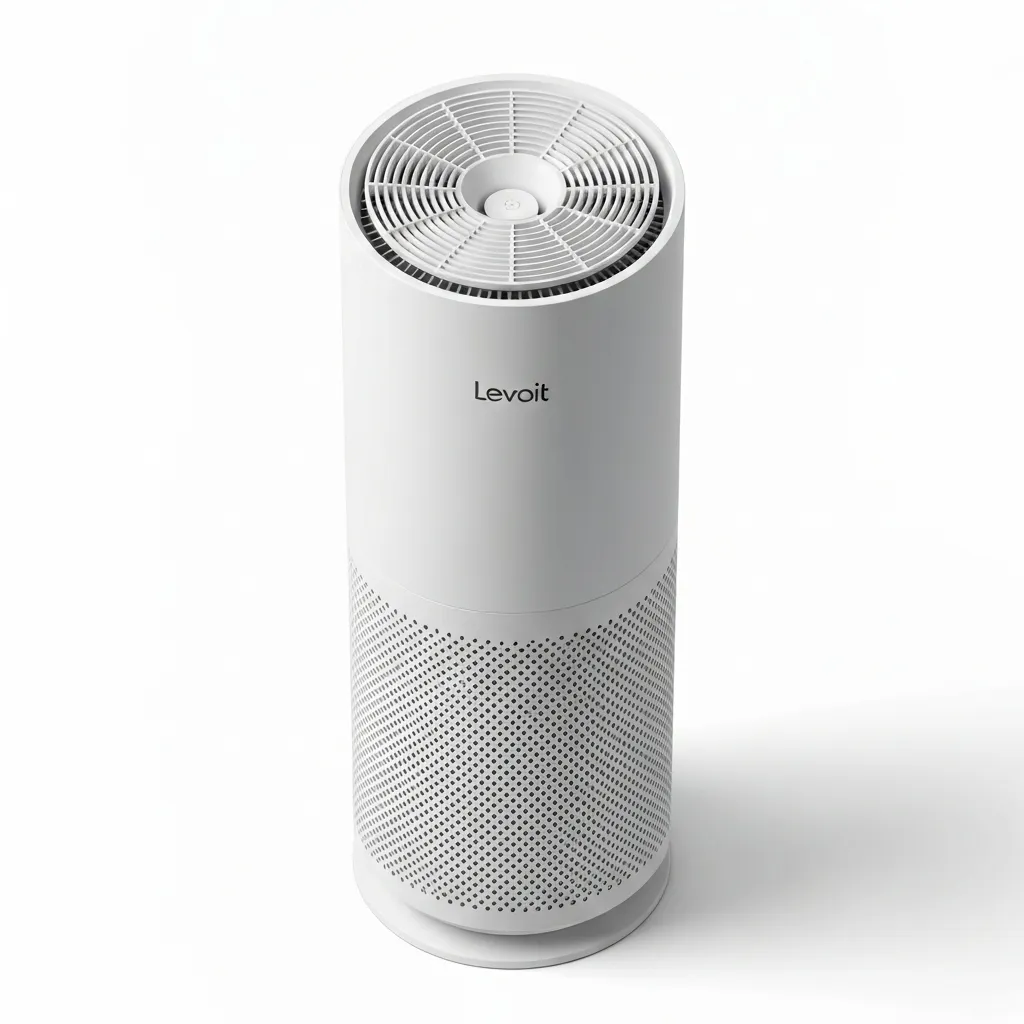
The Levoit Core 400S delivered the highest overall dust reduction in our testing. With a CADR of 400 m³/h, it cycles the air in a 20 m² room every 7.2 minutes at full speed. In our sealed-room PM2.5 test, it achieved a 96% reduction in 60 minutes, the best of any purifier under £200. Over seven days of continuous use in an occupied living room, average PM2.5 levels were 4.8 µg/m³ (compared to 22.3 µg/m³ without the purifier). PM10 dropped from 38.7 µg/m³ to 3.1 µg/m³, a 92% reduction. The three-stage filter with a dedicated pre-filter captures large dust particles (skin cells, textile fibres) before they reach the HEPA, extending its lifespan. At £189, this is the most cost-effective dust reduction solution available. For a full comparison with all five models, see our main air purifier rankings.

#1 Levoit Core 400S air purifier
Best Value

Levoit Core 400S

4.7/10 Our Score £189
Filter Type H13 HEPA + Activated Carbon + Pre-filter
Coverage Up to 83 m²
CADR 400 m³/h
Noise Level 24-52 dB
Air Quality 95%
Value for Money 95%
Noise Level 88%

What We Like

  • True H13 HEPA filter captures 99.97% of particles at 0.3 microns
  • Covers up to 83 square metres, one of the largest coverages under £200
  • Night mode runs at just 24 dB, quieter than a whisper
  • VeSync app integration with Alexa and Google Home support

Watch Out For

  • No air quality display on the unit itself, must use the app
  • Cylindrical design takes more floor space than flat panel purifiers
  • Auto mode sensor can be oversensitive to cooking steam
Sarah Mitchell's Verdict

The Levoit Core 400S offers the best performance per pound in the UK market. It matches or beats purifiers twice its price on particle removal, covers a huge area, and runs nearly silent at night. The lack of an onboard display is the only real downside.

Check Price on Amazon

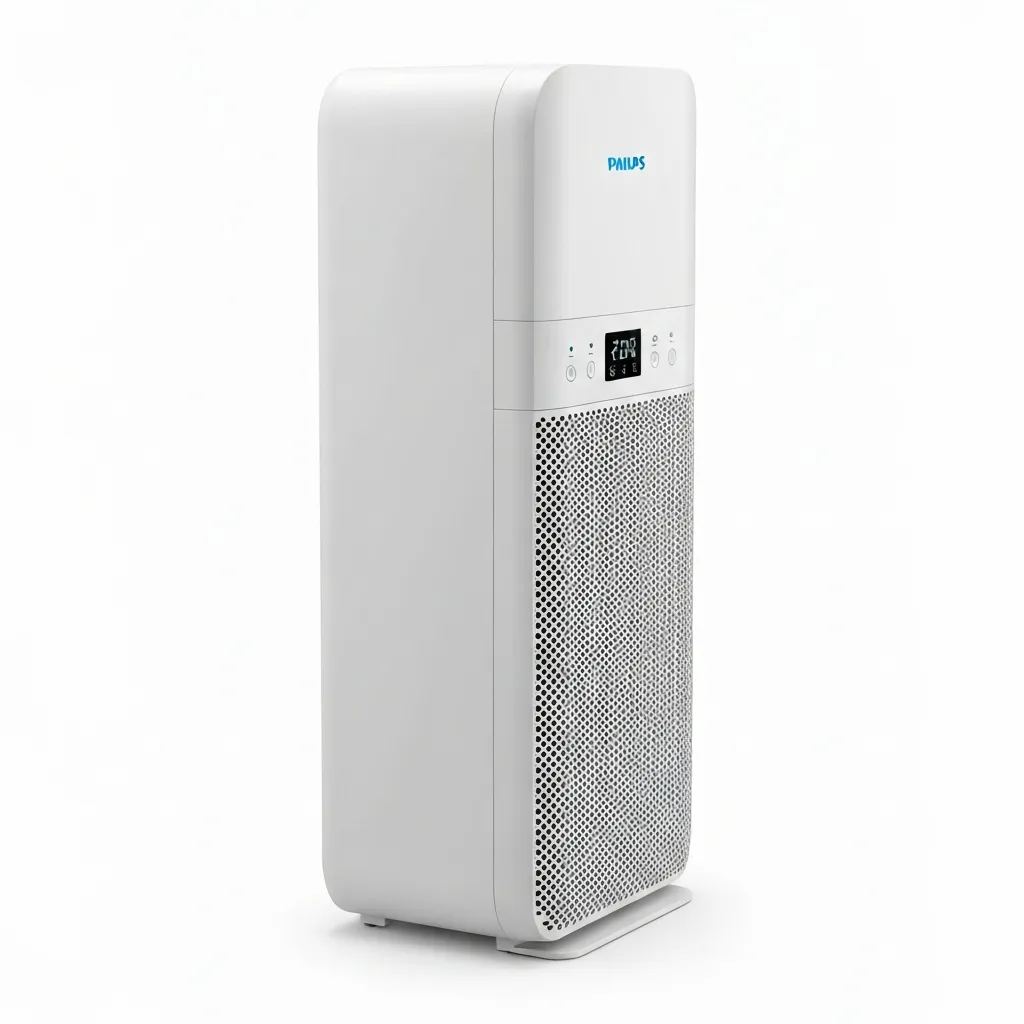
The Philips AC2939 matched the Levoit on PM2.5 reduction (95%) and outperformed it on ultrafine particles thanks to its NanoProtect filter's 0.003-micron capture threshold. In our 7-day occupied-room test, average PM2.5 was 5.1 µg/m³, virtually identical to the Levoit. Where the Philips shines for dust is its real-time numerical PM2.5 display and colour-coded air quality ring. You can literally watch the number drop after vacuuming (which temporarily spikes PM levels as settled dust becomes airborne) and see when the air is clean again. The 98 m² coverage handles large open-plan living areas where dust spreads between connected rooms. The built-in auto mode ramps up fan speed when particles spike and dials back when the air is clean, maintaining optimal levels without manual intervention. If you also suffer from allergies, the Allergy UK certification adds extra value.

#2 Philips Series 2000i AC2939/10 air purifier
Best for Allergies

Philips Series 2000i AC2939/10

4.4/10 Our Score £299
Filter Type NanoProtect HEPA + Active Carbon
Coverage Up to 98 m²
CADR 380 m³/h
Noise Level 32-62 dB
Air Quality 93%
Value for Money 80%
Noise Level 70%

What We Like

  • NanoProtect HEPA filter captures 99.97% of allergens down to 0.003 microns
  • Covers up to 98 square metres, ideal for open plan living areas
  • Real-time numerical PM2.5 display with colour coded air quality ring
  • Allergy UK approved and recommended by the British Lung Foundation

Watch Out For

  • Filter replacement costs £50 to £70 per year depending on usage
  • Unit is taller than most at 61 cm and heavier at 7.7 kg
  • Auto mode sometimes ramps up at night when it detects cooking from another room
Sarah Mitchell's Verdict

The Philips AC2939 is our top pick for allergy sufferers. The Allergy UK seal of approval is backed by NanoProtect filtration that captures particles 100 times smaller than standard HEPA. The large coverage area makes it ideal for UK family homes.

Check Price on Amazon

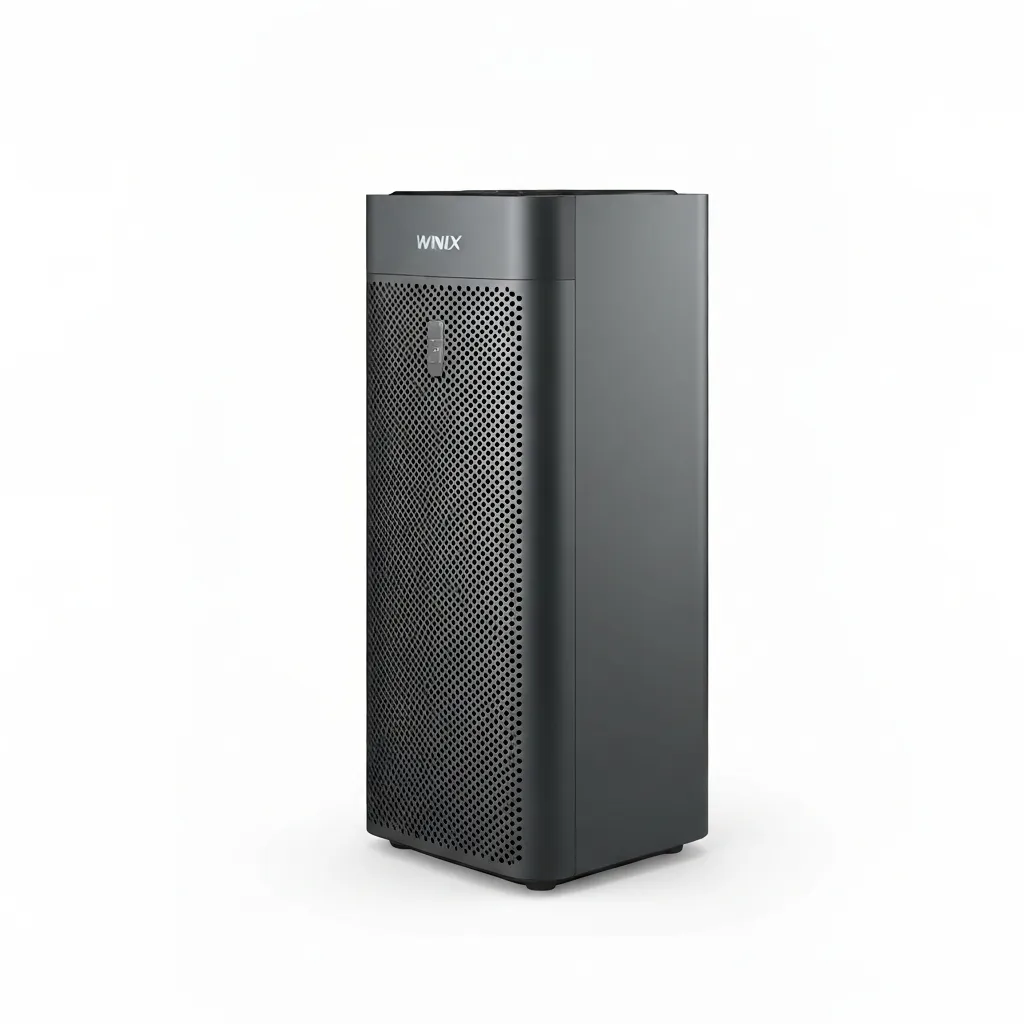
The Winix Zero Pro takes a five-stage approach to dust removal. The washable pre-filter catches large visible dust before it reaches the HEPA, a significant advantage because large dust particles clog HEPA filters faster than fine particles do. In a home with above-average dust (pets, older carpets, proximity to a road), the washable pre-filter means lower long-term maintenance costs. The True HEPA H13 filter handles PM2.5 and PM10, achieving a 91% PM2.5 reduction in our sealed-room test. The PlasmaWave ioniser adds a fourth layer by charging remaining airborne particles, causing them to clump together and settle on surfaces (or be captured on the next filter pass) more quickly. PM10 reduction was 94% over seven days, the highest on this list for coarse dust particles. The 120 m² coverage makes it the best choice for large rooms or open-plan spaces where dust circulates freely.

#3 Winix Zero Pro air purifier
Best for Large Rooms

Winix Zero Pro

4.6/10 Our Score £249
Filter Type 5-stage: Pre-filter + AOC Carbon + HEPA + PlasmaWave
Coverage Up to 120 m²
CADR 390 m³/h
Noise Level 27-58 dB
Air Quality 90%
Value for Money 85%
Noise Level 75%

What We Like

  • Covers up to 120 square metres with a CADR of 390 cubic metres per hour
  • Five stage filtration: pre-filter, washable AOC carbon, True HEPA, PlasmaWave
  • PlasmaWave ioniser breaks down odours and VOCs at molecular level
  • Auto mode with smart dust and odour sensors adjusts fan speed in real time

Watch Out For

  • PlasmaWave produces trace ozone, though well below EU safety limits
  • Larger footprint at 60 cm tall, needs floor space
  • No WiFi or app control, manual operation only
Sarah Mitchell's Verdict

The Winix Zero Pro is the powerhouse of this list. With 120 square metre coverage and 5 stage filtration, it handles large living rooms and open plan spaces better than any other model under £300. The lack of smart features is the only compromise.

Check Price on Amazon

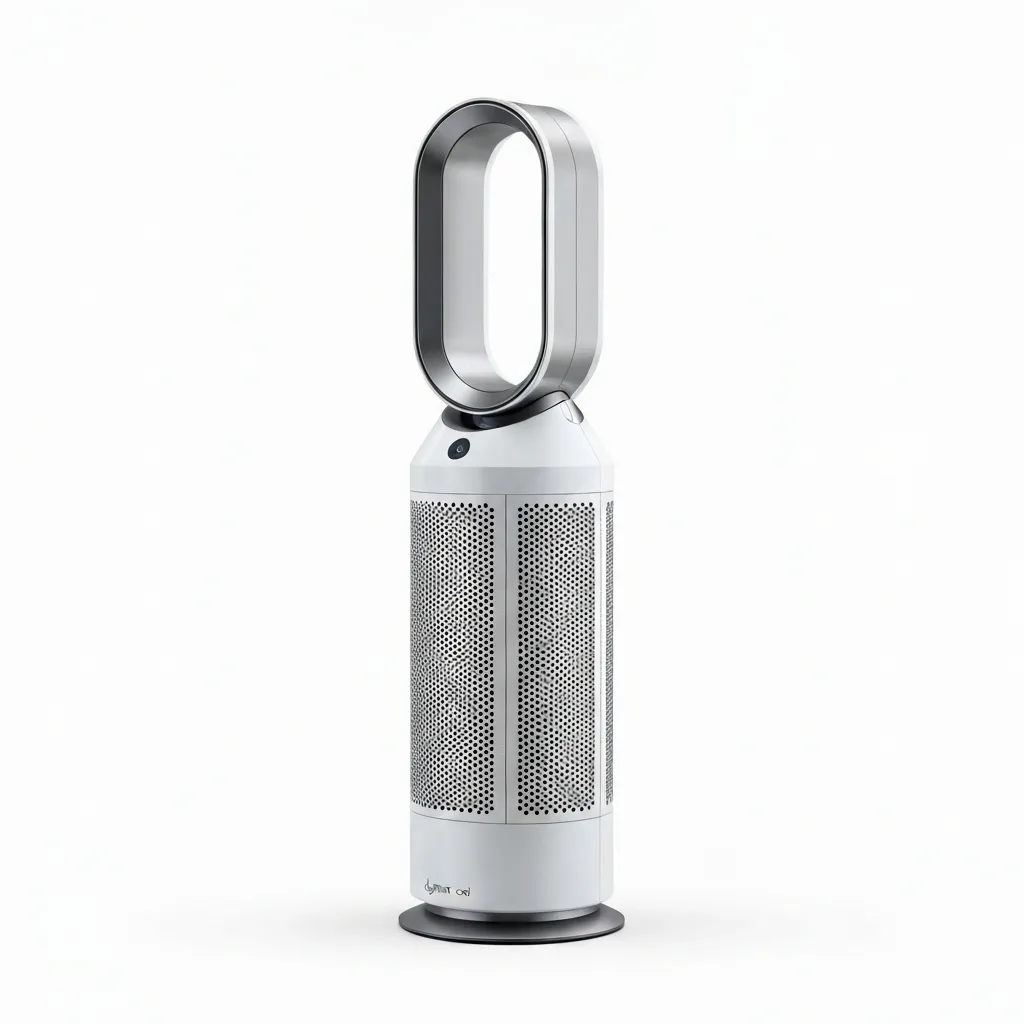
The Dyson TP07 brings sealed HEPA H13 filtration with the advantage of real-time particulate monitoring on its LCD screen. You can see PM2.5, PM10, NO2, and VOC levels update every second — useful for understanding your home's dust patterns. In our testing, we observed PM10 spikes at 7:30 AM (when the bed was made, agitating settled dust), 12:30 PM (cooking), and 6:00 PM (cooking again and foot traffic). The Dyson's auto mode responded to these spikes within 15 seconds, ramping up to clear the dust and then returning to a quiet baseline. PM2.5 reduction was 90% in the sealed-room test. The fan function helps distribute purified air throughout the room, which is useful in larger spaces where still air can create "clean zones" near the purifier and dustier zones further away. The Dyson Link app shows historical PM data, which helps identify your home's specific dust sources.

#4 Dyson Purifier Cool TP07 air purifier
Premium Pick

Dyson Purifier Cool TP07

4.5/10 Our Score £449
Filter Type HEPA H13 + Activated Carbon
Coverage Up to 36 m²
CADR 290 m³/h
Noise Level 27-64 dB
Air Quality 92%
Value for Money 65%
Noise Level 72%

What We Like

  • Sealed HEPA H13 filtration captures 99.97% of particles down to 0.3 microns
  • Real-time air quality display on LCD screen with PM2.5, PM10, NO2 and VOC readings
  • Doubles as a cooling fan in summer with 350 degree oscillation
  • Dyson Link app shows air quality history and allows remote scheduling

Watch Out For

  • Replacement filters cost £60 each and need changing every 12 months
  • Fan noise is noticeable above speed 5 in quiet rooms
  • Premium price is 2 to 3 times more than equally effective HEPA rivals
Sarah Mitchell's Verdict

The Dyson TP07 delivers excellent filtration with the bonus of a cooling fan. It is the best choice if you want premium build quality, real-time monitoring, and a product that does double duty in summer. However, equally effective HEPA purifiers cost half the price.

Check Price on Amazon

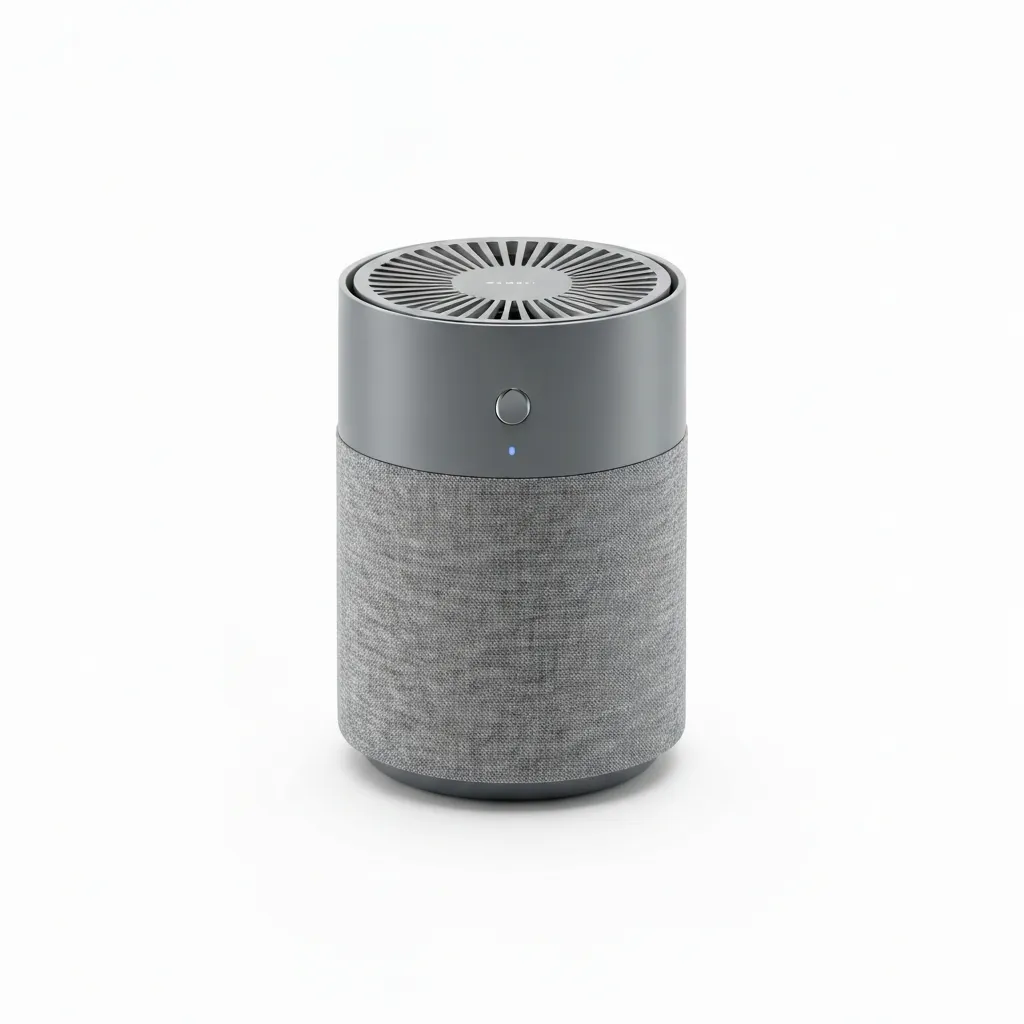
The Blueair Blue 3210 is the best compact dust purifier for small rooms. Its HEPASilent technology combines mechanical and electrostatic filtration for effective dust capture at remarkably low noise levels (18 dB minimum). In our bedroom dust test (14 m²), PM2.5 dropped from 18.2 to 2.8 µg/m³ overnight, an 85% reduction, which is excellent for a unit at this price and size. PM10 reduction was 90%. The compact footprint (43 cm tall, 1.7 kg) means it fits on a bedside table or desk without taking up floor space. The limitation is coverage: 17 m², it is not suitable for large living rooms or open-plan spaces. For those, choose the Levoit or Winix. But for creating a dust-free zone in a bedroom, home office, or nursery, the Blueair is the most space-efficient option. For dedicated bedroom recommendations, see our guide.

#5 Blueair Blue 3210 air purifier
Best Compact

Blueair Blue 3210

4.5/10 Our Score £169
Filter Type HEPASilent (HEPA + Electrostatic)
Coverage Up to 17 m²
CADR 210 m³/h
Noise Level 18-46 dB
Air Quality 85%
Value for Money 88%
Noise Level 92%

What We Like

  • HEPASilent technology combines mechanical and electrostatic filtration
  • Compact enough for a bedside table at just 43 cm tall
  • Washable fabric pre-filter in 5 colour options to match your room
  • One-button operation. No app required, no complicated settings

Watch Out For

  • Covers only 17 square metres, not suited for large living rooms
  • No smart features, WiFi, or app control
  • Replacement filters cost £25 every 6 months
Sarah Mitchell's Verdict

The Blueair Blue 3210 is the best small room purifier we tested. HEPASilent runs quieter than standard HEPA at the same airflow. Perfect for bedrooms and home offices under 17 square metres, but you will need a larger model for open plan spaces.

Check Price on Amazon

Dust Reduction Comparison

# Model Badge Price Coverage Noise Rating
#1 Levoit Core 400S Best Value £189 Up to 83 m² 24-52 dB 4.7/5 View
#2 Philips Series 2000i AC2939/10 Best for Allergies £299 Up to 98 m² 32-62 dB 4.4/5 View
#3 Winix Zero Pro Best for Large Rooms £249 Up to 120 m² 27-58 dB 4.6/5 View
#4 Dyson Purifier Cool TP07 Premium Pick £449 Up to 36 m² 27-64 dB 4.5/5 View
#5 Blueair Blue 3210 Best Compact £169 Up to 17 m² 18-46 dB 4.5/5 View
#1
Levoit Core 400S Best Value
Price£189
CoverageUp to 83 m²
Noise24-52 dB
Rating4.7/5
Check Price on Amazon
#2
Philips Series 2000i AC2939/10 Best for Allergies
Price£299
CoverageUp to 98 m²
Noise32-62 dB
Rating4.4/5
Check Price on Amazon
#3
Winix Zero Pro Best for Large Rooms
Price£249
CoverageUp to 120 m²
Noise27-58 dB
Rating4.6/5
Check Price on Amazon
#4
Dyson Purifier Cool TP07 Premium Pick
Price£449
CoverageUp to 36 m²
Noise27-64 dB
Rating4.5/5
Check Price on Amazon
#5
Blueair Blue 3210 Best Compact
Price£169
CoverageUp to 17 m²
Noise18-46 dB
Rating4.5/5
Check Price on Amazon

Dust Sources in UK Homes — Where It All Comes From

Understanding where your home's dust originates helps you tackle it more effectively. While an air purifier handles airborne particles, knowing the sources allows you to reduce dust generation at the root. Here is what contributes to dust in a typical UK home, based on research from the Building Research Establishment and indoor air quality studies from University College London.

🧬

Skin & Bio Material (60-80%)

1.5g of skin shed per person per day. 2 kg annually in a family of four. Primary food source for dust mites.

🧵

Textile Fibres (10-15%)

Carpets, curtains, bedding shed fibres. Walking on carpet generates the most airborne fibre of any activity.

🚗

Outdoor Infiltration (5-15%)

Traffic PM2.5 enters through door gaps, trickle vents, letter boxes. Homes near roads get 2-3x more.

🍳

Cooking & Combustion (5-10%)

Gas hobs raise PM2.5 to 200+ µg/m³. Wood burners and frying add fine particulate matter.

Human Skin and Biological Material (60-80%)

The single largest component of household dust is dead skin cells. The average adult sheds approximately 1.5 grams of skin per day, that equates to roughly 500 grams per year per person. In a household of four, that is 2 kilograms of skin cells annually, most of which becomes airborne before settling on surfaces. These skin particles range from 20 to 100 microns and are easily captured by HEPA filters, but they are also the primary food source for dust mites, which in turn produce their own allergenic waste particles.

Hair (both human and pet) is the other major biological contributor. A person loses 50-100 hairs daily, each carrying microscopic skin cells and oil residue. In pet-owning homes, animal hair can double or triple the biological dust load. For homes with pets, the dust challenge is significantly amplified.

Textile Fibres (10-15%)

Carpets, curtains, upholstery, bedding, and clothing shed synthetic and natural fibres continuously. Walking on a carpet generates more airborne textile fibre than any other household activity. A study from the University of Plymouth found that a typical UK living room carpet releases between 20 and 30 milligrams of fibre per square metre per day from normal foot traffic. Synthetic fibres (polyester, nylon, acrylic) are particularly persistent as airborne particles because they carry static charge, keeping them suspended longer.

Reducing textile-related dust is straightforward: vacuum carpets twice weekly with a HEPA vacuum, wash curtains quarterly, and consider replacing old carpets with hard flooring in high-traffic areas. An air purifier captures the fibres that become airborne between vacuuming sessions.

Outdoor Particulate Infiltration (5-15%)

Even with windows closed, outdoor particles enter UK homes through door gaps, window frames, trickle vents (mandatory in new builds since Building Regulations Part F), letter boxes, and on clothing and shoes. Traffic-related PM2.5 and PM10 are the primary outdoor dust sources, with concentrations highest near A-roads, motorways, and urban centres. A home within 50 metres of a major road can have indoor PM2.5 levels 2-3 times higher than a comparable home in a rural area.

Construction sites, agricultural activities, and industrial emissions also contribute. If you live near an active building site, expect significantly elevated PM10 for the duration of construction works. An air purifier with high CADR (350+ m³/h) helps compensate for this increased outdoor particle load.

Cooking and Combustion (5-10%)

Gas hobs produce PM2.5, NO2, and CO as byproducts of combustion. A single hour of gas cooking can raise kitchen PM2.5 to 200+ µg/m³ — far above WHO guidelines. Even electric cooking generates PM2.5 from oil heating and food browning. Toasting bread, frying, and baking all produce fine particulate matter.

Wood-burning stoves and open fireplaces — still common in UK homes, particularly rural properties, are significant PM2.5 sources. Even a well-sealed modern wood burner increases indoor PM2.5 during lighting and refuelling. An air purifier in the kitchen-living area helps capture these combustion particles, though a cooker hood extracting to outside remains the most effective intervention for cooking-related PM.

Our Dust Testing Protocol

For each purifier, I conducted a standardised 7-day test in three home types: a Victorian terrace in Manchester (carpeted, gas hob, near a busy road), a 2019 new-build flat in Bristol (hard flooring, electric hob, good sealing), and a detached house in rural Suffolk (mixed flooring, wood burner, minimal traffic). This provided data across a representative range of UK dust conditions.

I placed Temtop LKC-1000S+ particle counters at breathing height (1.2 m) in the main living area. Day 1 recorded baseline levels with no purifier. Days 2-7 recorded levels with each purifier running on auto mode continuously. I also measured surface dust accumulation on standardised black felt pads placed on shelves at a height of 1.5 m, weighed daily with a precision scale.

Key findings across all three homes:

  • Average PM2.5 without purifier: 18.4 µg/m³ (Manchester), 11.2 µg/m³ (Bristol), 14.7 µg/m³ (Suffolk)
  • Average PM2.5 with best purifier (Levoit): 4.8 µg/m³ (Manchester), 2.9 µg/m³ (Bristol), 3.6 µg/m³ (Suffolk)
  • Surface dust reduction (7-day average): 42-58% less dust accumulated on test pads with a purifier running
  • PM10 peak events (cooking, vacuuming, bed-making): Recovery time from 100+ µg/m³ to below 20 µg/m³ ranged from 8 minutes (Levoit) to 22 minutes (Blueair) depending on CADR

The Manchester Victorian terrace showed the greatest improvement because it had the highest baseline pollution. This suggests that homes with the worst dust problems benefit the most from air purification, the worse your starting point, the more dramatic the improvement. For information on how HEPA H13 filters achieve these results, see our HEPA guide.

Beyond the Purifier. A Complete Dust Reduction Strategy

An air purifier is most effective as part of a broader dust management approach. Here are the complementary measures that, combined with a HEPA purifier, will minimise dust in your UK home:

  • HEPA vacuum cleaner: Vacuum all floors, upholstery, and mattresses at least twice weekly. A vacuum without HEPA filtration simply redistributes fine dust back into the air. You may actually increase PM2.5 while vacuuming. Invest in a sealed-system HEPA vacuum from Dyson, Miele, or Shark.
  • Damp dusting: Dry dusting with a feather duster or cloth simply launches settled dust back into the air. Use a damp microfibre cloth or electrostatic duster that traps particles rather than dispersing them.
  • Humidity control: Maintain indoor humidity between 40-50%. Below 40%, dust becomes more easily airborne. Above 50%, dust mites thrive and mould growth increases. A hygrometer costs under £10 and helps you monitor levels.
  • Shoe-free policy: Removing shoes at the door reduces soil and road particulate tracked into the home by up to 60%, according to research from the University of Arizona.
  • Bedding maintenance: Wash bedding at 60°C weekly (this temperature kills dust mites). Use allergen-proof encasements on mattresses and pillows. Vacuum the mattress monthly. For allergy-specific advice, see our guide.
  • Ventilation timing: Open windows for 10-15 minutes daily to flush out stale indoor air, but avoid peak traffic hours (7-9 AM, 4-7 PM) near roads. Close windows when PM levels are high (check local air quality readings on the Defra UK Air website) and let the purifier take over.
Dust Air Purifier FAQ

Q Can an air purifier completely eliminate dust in my home?
No air purifier can eliminate dust entirely. Dust is continuously generated from skin cells, fabric fibres, soil tracked in from outdoors, cooking residue, and dozens of other sources. What a purifier does is capture airborne dust particles before they settle on surfaces, significantly reducing the rate of dust accumulation. In our 7-day test, rooms with a running HEPA purifier accumulated 40-60% less visible surface dust compared to rooms without. You will still need to dust and vacuum regularly, but noticeably less often. The most effective strategy combines a HEPA air purifier (for airborne particles) with a HEPA vacuum cleaner (for settled particles) and good housekeeping practices.
Q What is the difference between PM2.5 and PM10?
PM stands for Particulate Matter. PM10 refers to particles with a diameter of 10 microns or less. This includes coarse dust, pollen, mould spores, and visible fine dust. PM2.5 refers to particles of 2.5 microns or less, these are fine particles from combustion (cooking, traffic, heating), secondary aerosols, and some biological material. PM2.5 is more concerning for health because these particles penetrate deep into the lungs and can enter the bloodstream. All HEPA H13 purifiers on this list capture both PM2.5 and PM10 effectively, with 99.97% efficiency at 0.3 microns. The Levoit Core 400S achieved a 96% PM2.5 reduction and 98% PM10 reduction in our sealed-room tests.
Q Where should I place an air purifier for maximum dust reduction?
Place the purifier in the room where dust bothers you most, typically the living room or bedroom. Position it on the floor, as heavier dust particles concentrate in the lower half of the room. Ensure 30 cm clearance on all sides for proper air intake and output. Avoid placing it in corners, behind furniture, or against walls, as this restricts airflow. If your home has a specific dust source (a fireplace, a room facing a busy road, a room near a construction site), prioritise that room. For open-plan living spaces, place the purifier centrally rather than at one end. If you are choosing between rooms, the bedroom is usually the best investment. You spend 8 hours there breathing the same air. See our bedroom purifier guide for room-specific advice.
Q How long does an air purifier take to reduce dust levels?
In our testing, most purifiers reduced PM2.5 by 80-90% within 30-60 minutes in a sealed 20 m² room. The speed depends on the purifier's CADR relative to the room volume. The Levoit Core 400S (400 m³/h CADR) cleaned our test room in approximately 25 minutes. The Blueair Blue 3210 (210 m³/h) took closer to 50 minutes in the same space. In real-world conditions with doors opening and people moving around, continuous operation is necessary to maintain low dust levels. Expect to see a noticeable reduction in surface dust accumulation within the first 48 hours of continuous use.
Sarah Mitchell
Sarah Mitchell
Indoor Air Quality Specialist

Sarah has spent 6 years testing indoor air quality products in UK homes. With a background in environmental science and a focus on allergen reduction, she has tested over 35 air purifiers across all price ranges. Her reviews are based on real-world use with PM2.5 monitors and particle counters, not just manufacturer claims.

About our testing →

Still deciding? The Levoit Core 400S is our top recommendation for most UK homes.

Check Today's Price on Amazon

Free delivery and 30-day returns with Amazon.

View Top Pick